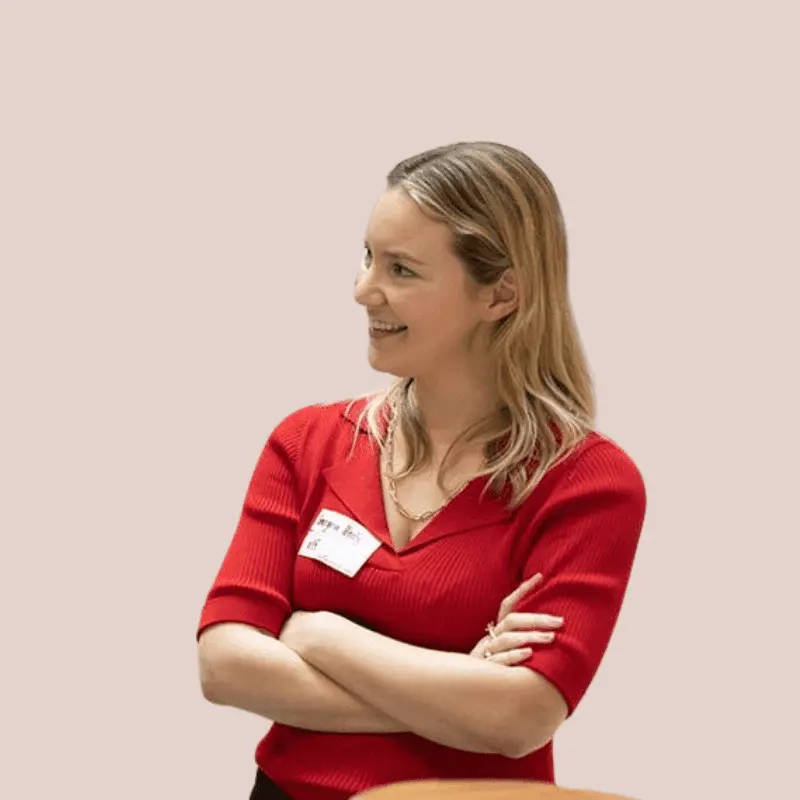
Transcript Synced · select any line to jump ▾ 0:00 Jeanne DeWitt Grosser: In sales, there's like an adage of yeses are great, noes are great, maybes will kill you. As a founder, being able to get to one of those two things, at least you know where to spend your time. 0:09 Georgie Healy: Fast snow is better than no drawn out maybe, right? Yeah, with AI, can a solo founder create a unicorn business? 0:16 Jeanne DeWitt Grosser: We would wind up with single engineers who are running full product lines souped to nuts. And that some of the best engineers are gonna be the ones that have vision, taste, really can decide this full product to build, because you're gonna have 10, 20 agents working for you if you figure out how to orchestrate that well. So I do think that will happen. What? 0:37 Georgie Healy: do you recommend companies do right now in this world of AI and models changing constantly? Where can people go more lean and where do you think people are throwing the baby out with the bath water? OK, picture this. You're Jean de Witgrosser, COO of Versel, former Stripe and Google executive, and you have just landed in Sydney for 48 hours. What do you do? You get up at 7am, you do the Bondi to Kujo walk. But before that, you talk to me, Georgie Healy on In the Blink of AI. This was an absolute treasure of an interview. We talk about the sales philosophy every founder needs to hear right now. Engineers are running entire product lines with AI agents and she tells us how and she told us what she built on Claude on her flight over here that right now the team at Versel and her engineering department is actually building. A huge thank you to the AXTREE team that let us record this in their offices. And guys, you don't want to miss this one. This is one of our favorite episodes of the year with one of the most exciting companies. out there in AI right now. Let's dive in. ⁓ What have you missed most about being in Sydney? 1:57 Jeanne DeWitt Grosser: Well, so I'm only getting to be out here for 48 hours on this trip because I was in Japan the first half of the week. And when I lived in Sydney, my first apartment ⁓ was on Campbell Parade in Bondi directly above icebergs. So when I got here, I didn't exactly have friends, right? And I was working pretty hard. And so I did the Bondi to could you walk basically both Saturday and Sunday every weekend. So my flight is at noon ⁓ tomorrow. and I will be getting up at seven so I can go do that walk. 2:29 Georgie Healy: I am so happy you say that because I'm a Brizzy girl originally, like I'm from Queensland. Yeah. And yeah, just that coastline is absolutely breathtaking. Yeah. I'm so glad you appreciate it. And well, 2:41 Jeanne DeWitt Grosser: It's great, and then I just heard apparently like Oprah has popularized it last month or so, so. 2:47 Georgie Healy: I mean, what can't that woman do? Like, she's incredible. We're more coogee based. We're like at the coogee end. ⁓ yeah, it's kind of, know, Bronte's really popular. It's very different kind of demo. And yeah, they're all kind of their own special little pockets along the way, aren't they? Yeah. If you didn't live in Bondi, where would you move to? 3:07 Jeanne DeWitt Grosser: Also I moved after six months because I made some friends. I to a house to share in Rose Bay. ⁓ I live in Marin, just north of San Francisco now and Rose Bay is kind of reminiscent of Tiburon. ⁓ I always loved that I took the ferry to work every day. You cannot feel bad about your life when you're taking a ferry to the Sydney Harbor to start your day. 3:35 Georgie Healy: Worst to live by, I agree more. Look, speaking of ⁓ incredible, like doesn't even make sense. Your career looks almost fake to me, Jean. High level leadership and executive roles from Google to Stripe and now for Sell. How does it feel going from those roles where you were kind of selling tools that process things to kind of more the creative layer? 3:58 Jeanne DeWitt Grosser: Yeah, I learned this at Stripe. ⁓ Stripe was an API. So like API is very composable. You're going to build a product on top of that. And I loved that sale because it meant that every single company you talked to, you needed to learn about their business, what they were building. And then part of the sales process ended up being riffing with them on sort of like, if you use Stripe in this way, you do realize you could do this thing that you may or may not have contemplated for your product. And so I'm a little bit of a product nerd at heart. So it sort of lets me be a salesperson and also like, know, moonlight as a PM. So that when I was looking for opportunities after Stripe, that was one of my criteria was sort of needs to be a large horizontal platform that ultimately powers a product being built so that I can go, you know, sort of geek out with my customers on what they're trying to bring to life. 4:52 Georgie Healy: Wow. And was it the role and the title or was it the people that you met or what looks like on paper a tricky jump, but one that now makes a lot of sense. 5:02 Jeanne DeWitt Grosser: You know when I looked at Versel so Giro and I had gotten in touch about a year and a half before I came to Versel and so I got to know him the business through that and what got me excited about Versel was actually a fair amount of patterns that looked like Stripe. Stripe obviously a phenomenal company and so I joined Stripe at about 400 people. Versel was about 600 when I joined. And it had sort of the same dynamics of real developer love, strong PLG motion that needed to go move into enterprise, good initial product that now needed to be multi-product, strong global base, but again, that you wanted to be global from an enterprise perspective as well. And so those things just got me really excited to be able to do and do in a key leadership role where ultimately, at least some portion of the company's final success would be directly related to decisions I would make. 6:01 Georgie Healy: I always have to remind listeners that yes, Stripe sponsors the show, but we've had some incredible ex-Stripe employees that still love the company. Yeah. And these kinds of things from the show. I just think that clearly whatever foundation or the atmosphere there really sets people and their careers up for success. It's incredible to see. Now listeners might be surprised about your undergraduate degree. Make this make sense to me. Arts. focusing on French, Spanish, but also markets and management. We're now in the English is the coding language era. Do you think these languages are helping you now? ⁓ 6:39 Jeanne DeWitt Grosser: sure they ever did other than great vacations. My parents advice in college was just pick what you love ⁓ because their view is if you're doing something that makes you want to jump out of bed in the morning you will probably be successful. And so I as you know an 18 year old I loved learning French and Spanish and so I pursued that. also in my mind as an 18 year old, father, who had actually been in tech, he had traveled all over the place. And so I thought to myself, I want to do international business. Therefore, I will speak languages. So I don't know that my undergrad has been relevant at all throughout my career, ⁓ if anything, probably been successful in spite of it. Other than like, I do think I've spent my career doing things that got me excited to jump out of the bed in the morning. And it's easy to be. successful when you're just excited to work hard. 7:36 Georgie Healy: I have to know, can you still speak those languages or? 7:39 Jeanne DeWitt Grosser: So ish. My nanny is all Salvadorian, so we only talk about my kids in Spanish, which has been great. But I will say it's sad how much it atrophies if you're not using it regularly. So my ability to conjugate verbs and pull the right vocab word is not what it used to be, which I find highly frustrating. But ⁓ someday when I am post-operating, I definitely plan to go back and probably take actual classes and get fluent in both again. 8:09 Georgie Healy: lived in France for a year and I was absolutely horrendous and living in Paris. They're really nice to you about it as you can imagine. But I'll be with you. Let's both with the AI tools and the AI learning and being multi modality. I'm sure we'll pick it up faster than ever, Okay, let's talk about Vaselle. We're so excited to have the launch here in Sydney. I had DiEM's on LinkedIn asking me about this and the product longer than I knew about it existing. we're really excited. ⁓ But we can be a little slow here in Australia to catch up. Why should Aussie developers get excited and start looking into Vercel? 8:56 Jeanne DeWitt Grosser: I think there's a real moment. So, Vercell for the last decade has been building what we call the front-end cloud. So, easiest, best place to build an application. And now a full stack one at that because we can do backends too. And I think for Aussies, you have an opportunity to, as we shift into more agentic workloads, is sort of start from scratch of, it's more greenfield, get the right platform in place and... you know, bring less baggage into this next era. So folks right now, I do think 2026 is the year of the agent. People sort of declared 2025 that, and I'm not seeing a ton of agents in production, but I was at a dinner with a bunch of Australian executives last night. Everybody has good ideas about them and they're gonna bring them to life this year. And I think... you know, one of the best ways to do that, not only quickly, but also in a way that's gonna let you iterate, have good, you know, velocity around that is to do it on Vercell's Agent Cloud. 9:58 Georgie Healy: You're right. We had guests a year ago. It was the year of the AI agent. We're all talking about agents. then there was definitely friction with users, enterprise across the maturity. What do you think currently is the biggest bottleneck and how long will it stay a bottleneck? 10:18 Jeanne DeWitt Grosser: Yeah, I mean, I think some of that friction was basically, ⁓ you know, the primitives that hyperscalers had developed were for the pixel era. And you actually need different primitives in order to bring agents to life. So examples of this that Vercell went out and built because v0, you know, was arguably one of the first truly AI native, ⁓ you know, solutions operating at scale. ⁓ So went out and built an AI gateway. know, models are getting increasingly reliable, but for a long time, they were literally like two nines of reliability. So the ability to failover, switch rapidly between models, now have observability around that, like just didn't exist, you couldn't buy that anywhere else. We have the workflow SDK. So as you build an agent, the point of an agent is actually, it's doing a complex workflow, not just like a single tool call. So workflow SDK enables you to do that without writing tons of code. Sandboxes. Those also, pretty much every agent will probably have that under the hood because they're writing code, they're writing SQL queries, they're going into file systems, et cetera, that didn't really exist in a very accessible way. And then the compute paradigm needs to be different as well. So I think anybody who was trying to build an agent last year had to stitch together too much stuff that was not designed for what we were trying to do. And then there've been a bunch of startups in the space that serve each of those individual pieces of the stack. But if you get a provider for Gateway, a provider for Sandbox, provider for Compute, you now have multiple points of failure. So, you know, one, probably gonna go down more often, and then two, diagnosing when something's not working well, where is that? So I think that's also held folks back of just, that's a lot of contracting, that's a lot of stitching stuff together, et cetera, versus now starting to see folks like Vercell that can give you a legitimate platform that you would build and your agentic workflows on. 12:10 Georgie Healy: Beautifully articulated and definitely something that people were telling me and I was experiencing as well. ⁓ Very interesting about the horizontal and less points of failure. Talk to me about ⁓ V0. This seems like such a flagship product for anyone that's not aware. Is this where you would recommend people start? 12:30 Jeanne DeWitt Grosser: Yeah, so v0 is a vibe coding application. So natural language put in your prompt and it'll output an app or an agent. I think that's like an underappreciated thing about v0 is you can build agents in v0 as well. With that, I think the answer is it depends. v0 today is more oriented towards a non-developer for some use cases. So I think you're going to see an absolute proliferation in software internally. Basically, everyone in finance, people, go-to-market who always wanted a piece of software and never could have it now can. It's awesome for them. We do see a lot of developers using it for component libraries, that type of stuff. So making the software development lifecycle faster, more iterative, involving design and product. And then if you're ultimately gonna build your agent in production today, you probably prototype that in NV0 and then would hand it off to an engineering team to sort of smooth out the edges on it. 13:30 Georgie Healy: I was speaking to someone who was just at this air-tree event that watched you and Jack's film and partners here and she was such a huge fan of the product, so excited about the open source. But then she said to me, I'm not technical though, but she had built so many products. What would you say to people that say they're not technical and therefore think they can't use Versel? 13:54 Jeanne DeWitt Grosser: Yeah, I mean, try. You'd be surprised like the degree to which you can one shot something, you know, just like single prompt and it outputs the answer. I had a funny example of this where we were interviewing a product marketer and one of the prompts we give them like a homework assignment was to create a landing page, you know, for a potential campaign for Vercell. And it was amazing what this web page was. I was like, god, hire this guy. And then I go and I can see what it was that he put into vZero. my goodness. And it was a single relatively nondescript prompt that was, more or less put into vZero, design a campaign landing page that would showcase the value of Vercell. And vZero was an insane product marketer. It output this webpage that was like, are your core web vitals, here's how you can compare to your competitors on performance, all this type of stuff. So again, I think sometimes people assume they have to be better at it ⁓ than you need to be. Now I will say if you truly want to build an interesting application, then probably you need to be thoughtful about how do you put together a mini PRD and give more than like a single sentence, but at least do the single sentence version, because you'll get a sense for what's possible. 15:10 Georgie Healy: When do you recommend playing with the tool? Is it when the kids have gone to bed at night? You know, because people say like, ⁓ I want to get around to this. I want to, you know, there's so many tools. I'm not sure which one. When should they open up the browser window, open up the cell and start playing? Do you think? 15:26 Jeanne DeWitt Grosser: If you say you're going to do it night and weekends, you're probably going to keep pushing that off. ⁓ So I would do it more of when you're about to go delegate something to someone else, try to do it yourself instead. Beautifully said. 15:40 Georgie Healy: I love that. I love it. I've got all these a million post-it notes. So like every time I've got some friction, I'm like, I need to vibe code that. I need to vibe code that. Okay. So we've talked about V0, product that I keep seeing everywhere. I need you to tell me and the listeners what it is. Next.js. What is this? Why is it so popular? Why do people love it so much? 16:02 Jeanne DeWitt Grosser: So Next.js is where Vercell got started, which is an open source front-end framework. It is used by millions of developers around the world. It's been around for about a decade. And it's basically one of the best ways to write a front-end application. ⁓ know, Nike, a lot of banks actually ⁓ build their websites on Next.js. And what's really interesting about it now is because it's so pervasive, it's so well documented, there's such a large community about it. The models have, for the most part, picked Next.js as the default framework to build an app. So if you go to Cloud Code and say, you know, build me this app, it will pick Next.js without you telling it to do so. 16:54 Georgie Healy: if the banks are using it. Sounds pretty secure to me. Yes, sounds incredible. Okay, I loved this state of AI report that the business did last year. It unpacked some really interesting stats. Can I ask you about a few of those? Why do you think it said 65 % of developers switch AI providers every six months? Why do you think that is? 17:18 Jeanne DeWitt Grosser: I mean, I think right now it's because ⁓ they change that rapidly, right? So we're still in this mode where like model drops and your life changes ⁓ and the frequency with which they're dropping, you know, it seems to be like increasing only. And so same thing on a bunch of developer tools. ⁓ Like I don't think the market has yet stabilized and come away with an obvious winner. We see that inside Versailles. We haven't standardized on a single tool for the engineering team. We actually let people mostly pick between them. At some point, maybe we all start to standardize. But I think there's a lot to be said too for developers just being able to use the tool that ultimately makes them most productive. And if what we care about at the end of the day is output, then how much does it matter whether person one and person two are using a different tool? 18:10 Georgie Healy: You notice that engineers and developers do have their brands and their products that they love too. I had a, you know, I've always been an Android phone user and I do. my gosh, no one did though. Did you? It used to get lots of comments and I still do. I still do too. I think Pixel's making a bit of a resurgence. Yes. I'll just airdrop. Oh, I've got an Android and then I go, oh, here we go with the commentary. The fact I've got an Android. bubble. Oh my gosh. I know. Remember that. To your point, I remember working with startups and their entire go-to-market strategy changed when Gemini 3 came out. Like these models that come out, it's very disruptive. And it's interesting to hear that you guys haven't picked a one standardized. 18:57 Jeanne DeWitt Grosser: No, I it's really interesting. mean, think a lot of folks had this experience with Opus 4.5, which is now dated, but like coming out, you know, before the holidays. And we came back from that and our executive team sat down to just be like, OK, the world changed. We need to update our worldview on how we're making investments, what products we're prioritizing. So it's a really interesting moment to be alive because you actually, you know, as much as we all want a stable strategy that we can keep marching towards. If you have not built organizational muscles to revisit that ⁓ on a random Tuesday, you are unlikely to succeed. 19:34 Georgie Healy: do you recommend companies do right now in this world of AI and models changing constantly? Where can people go more lean and where do you think people are throwing the baby out with a bath water? Terrible expression. 19:47 Jeanne DeWitt Grosser: I don't know what you mean. I think so. We have places we're going leaner now, but that's only because we succeeded in applying AI to that function or that type of work. So my advice has been to, one, start small, and then two, to maybe not overly prescribe the outcome you're trying to get to, but get there and then take action. We, this year, our fiscal year started in February, so we just wrapped up planning ⁓ and we are growing our sales development function sublinearly with sales. And that's because we made a lot of investments in AI last year for sales development. So we've been able to increase productivity of SCRs ⁓ and shipped them to other sort of parts of the life cycle. ⁓ But I didn't go into that being like, want a 30 % improvement in productivity and I want to automate this particular thing. We just sort of did that for six months and then said, okay, we've observed this type of actual productivity gain. Here's where we think we can push it and then put that into the go forward. ⁓ So I think that's worked for us because like, you just don't know at this point. I think this is where sometimes you see the reports of like, Enterprises aren't getting the ROI out of AI, and it's because you're using traditional frameworks of like, I'm going to go invest this amount of money to get this return, and like, I think it's probably more productive right now to just do and to start, you know, narrowly enough that you increase the probability of success in that thing, and then you can keep, you know, adding onto it. 21:34 Georgie Healy: almost like a mini product market fit situation. love that. What about having such a technical product and working in technical teams? There's a very famous Silicon Valley skit. It must be so old now, but the sales teams are trying to market this hardware and then the technical teams are like, that's not it at all. How do you bridge that gap? How do you make sure that people are all speaking the same language so that when it's shared with customers, it's reflective of the product? 22:08 Jeanne DeWitt Grosser: This is, it's a very real challenge. We've been focusing a lot on this in Vercell, particularly as you go from just developer sort of PLG oriented to wanting to sell to a larger business. So a couple of things that we've been doing that have worked. One is we have this GTM EPD Fusion meeting. So we meet weekly and we do two things within that meeting. One is we review product feedback. So we developed, we built an app. And it's to put any sort of feedback of product apps into. So initially AEs or SEs would input stuff after calls. Now we have an agent that listens to Gong transcripts and then it'll pull out, hey, seems like there was a feature request in here, do you agree? If so, it sticks it directly in the GTM feedback tool. So we consolidate all of that, associates it with an opportunity in Salesforce. So we say, okay, this feature request has currently got 10 different customers against it. That would be an incremental $1.5 million, that type of deal. In that meeting, the engineering team has agreed to for anything that has enough traction, they'll say yes, when, or no, why. So we sort of close the loop and we have, ⁓ you know, sort of know what we now can talk about versus not. And then, or planning to do is like a full closed loop on this, which is I have been go to market long enough to know that there are times that we ask the engineering team to build something and then we didn't really sell a lot of it. Okay. So our intent is now when that thing gets built, ⁓ we will go back to everyone who submitted those 10 customers and say, great, this is now available, please go contact them. And then we're actually planning to measure how much revenue do we incrementally generate from that 23:44 Georgie Healy: . 24:03 Jeanne DeWitt Grosser: product update and then for 30 days, 90 days, two quarters after that ⁓ to show, okay, when GTM gives feedback and product does something about it, was it a good investment? So anyway, long answer, but that's the first half of the meeting. And then the second half of the meeting is ⁓ specific customers. ⁓ So ones where we're working closely together and maybe there's some product friction and often we're then... ⁓ some of our engineers with the go-to-market team to like be shoulder-to-shoulder with that customer, get a lot of empathy, understand the issues. So that's helped a lot. And then lastly, ⁓ you know, we do a regular launch cadence and part of that is just getting clear on what are some of the things that a go-to-market team needs to succeed. So when you launch a capability, what's the open source template of like, here's a thing you can build with it. but was the point of view on the ideal customer profile that you built this for? Who should we go sell it to? it's, sort of, ⁓ Guillermo likes to say, everyone goes to market. Yes. Which I think is a great culture. 25:13 Georgie Healy: That's a beautiful expression that we have so many founders that listen to the show and to those listeners, they are kind of back to blank sheet of paper often because of these models that are coming along. We thought industry verticals were motes in and of themselves. When you speak to customers that you trust and you're asking their feedback, how do you identify them? What do you recommend to founders out there that want really genuine feedback? because I know that everyone's really nice to me and I'm not sure they actually would take their wallet out. 25:45 Jeanne DeWitt Grosser: Yep, totally. One of the things, Stripe did this incredibly well, and we're now building this muscle at Vercell, ⁓ is really thoughtful design partnership. So Stripe has talked a lot about ⁓ Lyft. So instant payouts was developed because of Lyft. Stripe Connect that basically everyone on the planet used was developed because of Shopify. Stripe Billing was developed because of Squarespace. So all of that was sort of knowing what are some of the most innovative companies out there that are pushing the needle and their needs are likely to be indicative of what the rest of the market is gonna want in six months, 12 months. And so that's one of the things that we're now doing at Versailles. So Notion, they're doing incredible stuff with agents. So anything that Notion is demanding that they need from an infrastructure perspective. We want to find that out and support that because someday someone else is going to want that too. So I think design partnership is key. And so along those lines for a founder is actually sit down and be like, who are your ideal Lighthouse customers? And then I think you actually can often get in front of them by not trying to sell, but being like, this is an R &D conversation. ⁓ Ultimately then you have to decide when the R &D ends and when you would like the money to occur. In sales there's like an adage of yeses are great, noes are great, maybes will kill you. And so as a founder being able to get to one of those two things, at least you know where to spend your time. 27:19 Georgie Healy: fast snow is better than a drawn out maybe. Right. Yeah. One last thing on Teams. I'm sure you're sick of this, but the go to market engineer is not something that everyone knows. What is it and how do they solve problems differently than the classic engineers that we think of like I'm a millennial, like classic engineers of 20 years ago. Yeah. 27:42 Jeanne DeWitt Grosser: So go-to-market engineer, they are just focused on the internal excellence of the go-to-market function. So for us, we've had a lot of success in using sales engineers who had CS degrees, have written code in their life, are good at it, ⁓ that wanted to move into this GTM engineering function. They've got great empathy, they've sold before, ⁓ and then now they're focused on building agents. I sort of think this is on some level like next gen rev ops, like, you know, rev ops typically within it has a systems team and typically the system what systems team is buying third party software and then configuring it for your workload, whether that's Salesforce outreach, you name it. And so go to market engineering is more the build version of that. So I think basically what you're seeing is like build by calculus is changing right now and we're still going to buy a lot of software, but we're going to build a lot more than we used to. And so the GTM and is doing that piece of it. 28:42 Georgie Healy: There's two things I've noticed from this conversation. You've been speaking about very technical sales leaders and also very empathetic sales driven engineers. Are you seeing that happening in your business a lot at the moment where people do have to kind of have understanding across? 29:01 Jeanne DeWitt Grosser: I really do. ⁓ One of the reasons I absolutely love selling right now is most people don't totally know what they want to buy, which means you add way more value as a salesperson, right? And so I think being able to have this empathy of I'm going to go out, I'm going to do way more discovery than I would normally do to help actually a company think through their problem so that they ultimately build by, you know, the thing they actually need. It just feels like we're in this moment where people don't know the answer. And I think they're going to work with the types of companies that give them the mental model to explore their challenges and their opportunities. And then the confidence that you will be a legitimate partner as they then work through those because we're all going to be iterating a ton this year, next year and beyond. 29:50 Georgie Healy: I love that because I am also noticing with all the tools and all the upgrades and all the news headlines and all the competitive products, people do just want you to tell them, try this. This is why. Because it is overwhelming out there. Yeah. Yeah, it really is. ⁓ OK, so to finish the interview, we've got our rapid fire questions. All right. Let's start with one AI hack you might have or used recently. 30:16 Jeanne DeWitt Grosser: on my flight here and this goes back to your point on like when should I use AI? Basically we're building a bunch of awesome capabilities within the company. I felt like we could do more to bring them together into like what the enterprise offering would be. I am not a product manager ⁓ but I went to Claude and I said hi Claude you know I am the chief product officer of Versel. I am trying to design XYZ you know it's basically like a multi-paragraph prompt. and make me a PRD for this enterprise offering. And what it came back with was insane. I iterated on it with it, but probably got to 70 % of something that I could then go take back to our product and engineering team and be like, okay, do you guys think there's a there there? And now they're gonna go put an engineer on my idea and I'm not the product engineer. so just a great example of like, you just have to try on some of these things to bring your ideas to life. 31:15 Georgie Healy: Have you got a background and product I feel like you do? 31:18 Jeanne DeWitt Grosser: I don't. I going into product when I was at Google, but Google at the time, had to have a CS degree to be a product manager. So when I actually took an educational leave at Google to get my MBA, and I debated trying to go minor in CS at Stanford while I did that, and I decided that's a lot of work. 31:42 Georgie Healy: ⁓ Yeah, are lower hoops to jump than Stanford CS I think that would still put you in great stead as an executive. 31:53 Jeanne DeWitt Grosser: Yeah, that never happened, but I would say I at Stripe I actually also debated moving into product and so ⁓ I find ways to moonlight despite never quite making the leap into the product. 32:04 Georgie Healy: Right, right. Products fun. I find I like used to sit also next to the product people at Google as well. Like what you working on? Amazing. Yeah. Long flights. Nothing better, right? There's something about them where it's like, what is that burning thing that I need deep work on? That's fascinating. Okay. With AI, can a solo founder create a unicorn business? What do you reckon? 32:31 Jeanne DeWitt Grosser: think so. talked about this. This was a conversation we had in our executive meeting after the holiday break ⁓ with Opus ⁓ was what is the future of engineering? And our view is that we would wind up with single engineers who are running full product lines soup to nuts. ⁓ And that some of the best engineers are going to be the ones that have vision, ⁓ taste, really can decide this. this full product to build because you're going to have 10, 20 agents working for you if you figure out how to orchestrate that well. So I do think that will happen. 33:09 Georgie Healy: Wow. I'm excited to see it, but also ⁓ it makes me feel like I should be doing more. I should be building more things. I could be a unicorn. Let's go. OK, but if this does happen, COs like yourself, when do you come into the picture? Do you come into the picture? 33:19 Jeanne DeWitt Grosser: You Yeah, one person EPD org. But I mean, think you'll like TBD if we get to a point where people just decide to buy without sales too. But you are sort of seeing some of the AI native companies right now actually have a larger percent of the organization in GTM because they have such incredible engineering efficiency. But at the end of the day, customers do still need help making a decision. So maybe that unicorn still gets a COF. 33:30 Georgie Healy: Yes. I believe that I would want one. Okay, and to finish with, if there's one piece of advice that you would give to people that are overwhelmed about AI, I speak to engineers that are overwhelmed by AI, people with non-technical backgrounds overwhelmed by AI, where and how do you recommend they get started and what kind of mentality should they have towards it? 34:20 Jeanne DeWitt Grosser: I think it's one is start small, right? So again, you're just pick a thing that you want to go start using AI with. I do think start now. And then I feel like this has been true about my career is just like, you can't be afraid to ask for help. So I still do this all the time where, so Drew runs my go-to-market engineering team. I ask him dumb questions constantly where I'm like, okay, can you explain to me how you built this? Cause I want to understand it. I want to be able to talk about it. You know, same thing, our head of data science, Abhi, built this incredible data agent as another one where I'm like, okay, can you explain that to me? You know, or like, we just did a bunch of planning work. And, you know, a lot of that we did without AI in sort of the typical spreadsheet way. You know, and so I'll go talk to him and be like, okay, well, if I now wanted to do this with D0, that's the name of our agent, you know, can you just help me? Like, what would I do here? But. Last thought on this, often you can ask that question that I'm asking Drew or Abhi of Claude or ChatUBT. Exactly, and it'll be just as good. So I do think like Yermo's been talking about that for onboarding at our company. It's just like, you know, at a certain point, it's all gonna be, you know, here's your, you know, your ChatUBT internal interface. We've loaded it with content. Go ask a bunch of questions. 35:19 Georgie Healy: He was anyone think that if Jean, the CEO of Vercel is asking questions, we can all ask questions. You can start with the AI and then maybe ask your team members if you've tried your best. This has been absolutely amazing. Such a privilege to be able to interview you. Thanks so much for being on the show. Yeah, thanks for 35:56 Jeanne DeWitt Grosser: Tons of fun. 35:59 Georgie Healy: Thank you for listening to In the Blink of AI. You can check out the show notes for anything discussed in this week's episode, and we will be back next week. This podcast was produced by Day One with music by Dan Hansen and visual artwork by Sophie Tyrell. If you loved the episode, please tell your mates. And I love AI news. Please share your thoughts and suggestions to GeorginaRoseHealey at gmail.com.

 In The Blink Of AI with Georgie Healy
Presented by Deel & Stripe
In The Blink Of AI with Georgie Healy
Presented by Deel & Stripe 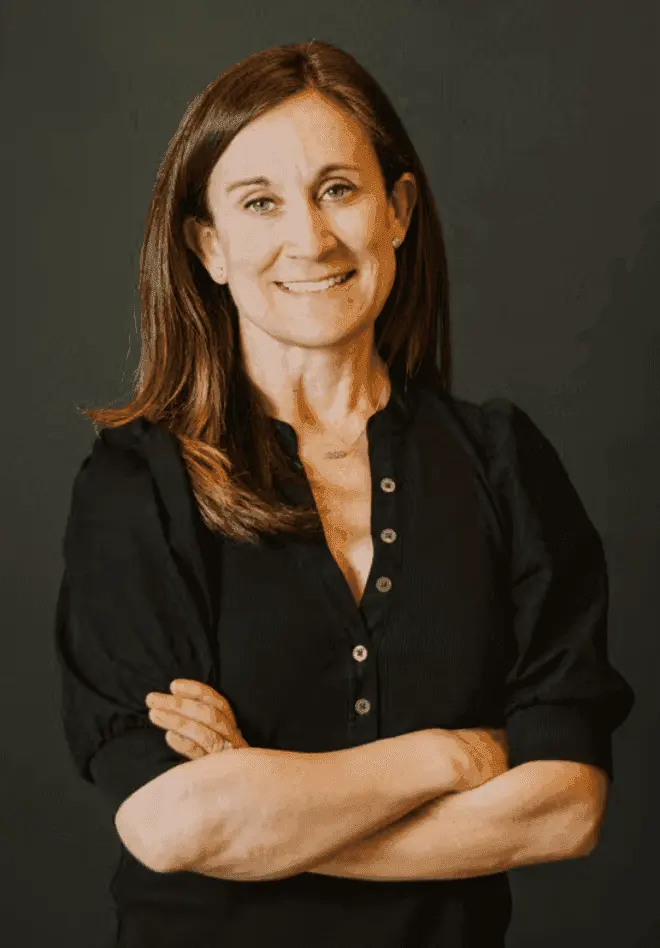

 ▶
▶  ▶
▶  ▶
▶  ▶
▶  ▶
▶ ▶
▶ ▶
▶