“It is a completely different level of accountability, because it is your own baby.” — Mark Samlal Mark Samlal grew up as one of the only Indian families in a small Perth township, went on to co-found a payroll company from a secondhand desk in Singapore with co-founder Samantha, and eventually listed it on the ASX as PayGroup. In 2022 Deel acquired the business in an all-cash deal worth $120M, a 143% premium to market.
In this conversation with host Pauline Fetaui, Mark talks about growing up, the "4 or out the door" sales mentality that shaped his early career, what it actually feels like to run a public company, and why he has stayed on at Deel almost four years after the acquisition. He also opens up about the pull he is feeling to reconnect with his roots in Fiji and India.
Chapters
0:00 Cold open: accountability and the "4 or out the door" origin story ▶ 1:55 Younger Mark: born in Fiji ▶ 9:23 University and the early grind in real estate ▶ 15:56 Into telecom, then payroll software — learning on the job ▶ 21:43 Meeting mentor Phil Cave and turning around Lendlease Employer Services ▶ 32:40 Growing up in a small Perth township ▶ 37:59 The move to Singapore and building the Sharks Basketball community ▶ 43:13 Running multiple businesses at once and bootstrapping PayAsia with Samantha ▶ 51:25 Skipping VC/PE, and what it is really like leading a public company ▶ 1:05:36 COVID, 3 acquisitions, and the road to the Deel deal ▶ 1:09:52 The Deel acquisition: $120M all-cash, 143% premium ▶ 1:13:34 Joining Deel and AI's impact on HR and payroll ▶ 1:27:03 Business regrets ▶ 1:38:34 The Pingyao story, undervaluing Asian entrepreneurs, and where he is headed next ▶ Transcript Search or select a timestamp to jump ▾ 0:00 Pauline Fetaui: Being a listed company in Australia after managing listed companies in Asia, what was the journey like? 0:08 Mark Samlal: Oh, it's a completely different level of accountability, Pauline, because it's your own baby. 0:14 Pauline Fetaui: What was your experience in your earlier career, I guess, where it wasn't working for you? 0:19 Mark Samlal: Growing up, particularly in Western Australia, I was always called the worst racist names that Indigenous people will get because it It was Indigenous people and Mark that were brown. 0:30 Pauline Fetaui: What has been the driving force why you've continued to stay in Deal? 0:33 Mark Samlal: It's mostly because of the people. You're just blown away about what their skill sets, experience were, all the way through to Alex Shaw. The true ambition of the business, the fact that it's still founded around the fact that talent is everywhere and there should be no such thing as borders or boundaries to talent acquisition. 0:54 Pauline Fetaui: For or out the door? That was the rule Mark Samlal lived by in his first sales job. Sell 4 homes a month or you're gone. He carried that grind through telecommunications, through payroll software, all the way to Singapore, where someone told him on day one, Asia is crazy and Australia is lazy. He built a payroll company from a secondhand desk. No VC money, no private equity, just his wife Samantha, a couple of secondhand computers, and some internet dongles. That company later listed on Australian Stock Exchange, then sold to Deal for $120 million. But that is only part of the story. A share price drop that felt personal and a man whose great-grandfather was labeled on paper as an agreement. This is Mark Samlal's origin story. 1:51 Ad: You're listening to a Day One FM show. 1:57 Speaker: Founders scale faster on Deal. Set up payroll for any country in minutes. Hire anyone anywhere. Get Visas handled fast and get back to building. Visit deal.com/dayone. That's d-e-l dot com slash day one. Mark Samlal, before we get into your very extensive career and your business, I want to go back. So I would love you to tell me about. younger Mark and where you come from. 2:31 Mark Samlal: Well, thank you, Pauline. I'm really looking forward to today's discussion and the preliminary work that we've done around the questions and understanding how emotional it's going to be for me. It's going to be an exciting, exciting couple of hours to spend with you, and hopefully you'll get the right information. So younger Mark was born in Fiji, obviously Fijian Indian. And that in itself was an exciting piece in understanding the cross-cultures that I was growing up in. My parents were very focused on the ability to raise their children in the best way possible, and that then determined that younger Mark and my younger sister Michelle were to make the great move from Fiji at 3 and 2 across to Australia. where my father was very excited to take on further education, which is a constant thematic in our family's life. 3:33 Pauline Fetaui: And your father, what education did he take on? 3:37 Mark Samlal: So my father was a people person, and that definitely has rubbed off on myself. And the reason that he, he was a people person is he started off his career as a high school teacher in Fiji. And in Fiji, a high school teacher has the same reverence as a judge. 3:55 Pauline Fetaui: Wow. 3:56 Mark Samlal: And moving, moving to Australia to become a high school teacher in the 1970s, early 1970s, was quite a culture shock for him because he realized that the reverence that was held for a high school teacher was not similar in Australia to that what's in Fiji. And that really pushed him to go on and do further education where he applied to do a master's of social work at West Australian University. And that took us all the way over to Perth and growing up in a very small, small township in Perth and allowed us to really gel as a family as the only Indians most probably in the state at that time compared to what it was. So that in itself, that feeling of drive, that feeling of wanting to succeed and what his values were around helping people and helping ensuring people people that were marginalized were looked after the best possible way in his post-high school work really rubbed off on me. And I was just seeing hard work and commitment to family and community everywhere I looked, whether it be at my grandparents, whether I looked at my parents. And that's something that really has stayed within me, Pauline, that hard work, the family, contributing community. It's been a constant, consistent life impact for me. I, I love the way that I speak about helping my community, and I love the way that I can continue to help my community wherever they may be, however it fits in today's environment. 5:41 Pauline Fetaui: It's really beautiful. Um, you know, one would think that you would, given that role model that you had in your father, and going into the social aspect and that drive for community and family, I could imagine that you would go down that path as well, you know, of not-for-profit, social. But you definitely went in a different direction, a very ambitious direction. Where did that ambition come from? 6:05 Mark Samlal: That's absolutely the case. Dad was definitely a role model, and I've never met somebody that's loved humans more than Dad. And that was something that stuck with me all the way through. But hardworking also came from my mum. Hardworking also came from my grandparents and my aunts. And I think that's typical of people that migrate. I don't think that's going to be any large revelation to your listeners around the migrant mentality. Where it really gelled for me was when my parents, who worked extremely hard, allowed me the great fortune of being able to go to what is deemed to be a very exclusive high school in Melbourne, Victoria. Dad's career, um, after his Master's of Social Work had blossomed in Fremantle at Fremantle Gaol in Western Australia. He got a great opportunity to come over to Victoria and really test his skills and broaden his, his horizons around helping people. and was based in Coburg, really close to Pentridge Prison, where he ran the probation and parole department with a great focus on helping and rehabilitating what was then determined to be H Division prisoners. So the worst of the worst, to be able to release them into society with the right guardrails. Pauline, this was such an incredible experience for me because even on Christmas morning, there were times that I would go to Pentridge with Dad and say hello to some of his favorite clients, favorite people that he would like to speak to, and just show some humanity on, on Christmas morning. And it wasn't unusual to see at the Christmas lunch table, therefore later on the day, somebody that Dad had helped. And one particular gentleman reminds me, his name was Snowy, and he was a recalcitrant counterfeiter. And all he wanted to do after Christmas was to counterfeit another check and get back to prison because he just couldn't manage the guardrails that society had placed in front of him to stay on the straight and narrow. He just wanted to go back to prison. It was quite shocking. So I really felt as though that I'd seen the best of the best in Dad and his colleagues. And I really couldn't see myself working in that environment. And going to a wonderful private high school that I was afforded to go to really opened up my community in terms of my friendship groups and my mateship groups here in Victoria. And it showed me a completely different side of life that I'd never been privy to, both with friends whose parents were incredibly gifted in business, incredibly gifted musicians, incredibly gifted in analytics. And just listening to their stories and talking to them— and I always try my best to talk to my friends' parents as much as time would allow— it really opened up my eyes to what could be done and how things could eventuate for me. But I didn't have the courage to tell my parents. It was still the dutiful son that was going to become a doctor or a dentist. And that was the first version of young Mark coming out into university and trying to understand where he would sit and be placed in this world. But eventually the grab of business got a strong hold of me. 9:46 Pauline Fetaui: And what university and what did you study? 9:50 Mark Samlal: So I went to Wesley College in Melbourne and I was lucky enough to go to La Trobe University. where I didn't graduate, but I think my biggest accomplishment at university was meeting my wife. And we've been married 36 years, and that's the, that's the best outcome. Thank you. That's the best outcome for university. Unfortunately, life and my parents' challenges with their life and their marriage got in the way of that. And I had a— Mm-hmm. A very early entrée into guardianship where my 10-year younger brother I looked after, and that sort of completely derailed my ability to focus on university, and I had to work. Mm-hmm. So bartending, working the door on nightclubs and things like that where I could use my language skills obviously worked very well for me until I ended up in what was very formative for me, but working in real estate in the '80s, and it was quite a booming environment. And And it was certainly exciting to see how real estate could change the— how people's lives could change by gaining their first home or their dream home. And commissions were abundant, so it was a great time for me to embark a career in sales. 11:11 Pauline Fetaui: That's fantastic. So you went into real estate and built your career and continued to remain in Victoria? 11:18 Mark Samlal: I did. And the interesting point, it's still the real estate ethos that Barry Plant then— and I'm sure your listeners here in Victoria will know that name. It's a big, big franchise group like Ray White. 11:35 Pauline Fetaui: Mm-hmm. 11:36 Mark Samlal: 4 or out the door, Pauline. 4 or out the door. So if you did not sell 4 homes in any given month, you were sacked. You could have had 3 years of incredible success And if you didn't do 4 in that next particular month, you were terminated. So the panic stations, panic early, being prepared, the grind, the grit that you needed to do— again, this hard work that was ingrained upon me from my parents and grandparents— it certainly put me in wonderful stead to, to focus on what was then an incredibly dynamic career But for or out the door has been a constant theme in my life around making sure that I was in a situation where I panicked early. And whether that's good for the soul and whether that's good for your brain, we can talk about that a little bit later on, particularly around, you know, later, later life and Mark. But it was incredibly beneficial financially and put me on a really nice start to allowing me to develop and understand how impactful you could be as a business person to your family, your siblings, and, and people around you. It was, it was, it was nice. And there were the trinkets as well which came along with it, including a car phone. I can't remember what was that. 13:07 Pauline Fetaui: I could imagine a brick. It was a brick, right? 13:09 Mark Samlal: It was even before 018. It was 007 numbers. So there you go. It was, it was a brick. 13:17 Pauline Fetaui: I can't imagine the level of, I guess, responsibility you had to take on and sacrifice with university, becoming a guardian for a loved one, and also obviously newly married and trying to grow your career. It sounds like you were also motivated maybe by that responsibility and accountability. 13:42 Mark Samlal: Yeah, community, family— no choice in my DNA, you know. That's always foremost and and making sure that my family at that time, which was obviously my brother and my sister, were as well— in as good a place as they could be, was terrific. So it was impactful that I was able to do that, and I was delighted that I could. But again, you know, it definitely had some downsides on, you know, growing up, Mark. Mm-hmm. I wasn't the guy that was at the nightclub. I wasn't the guy that was, you know, playing football every weekend. I tried my best to combine everything, but the foremost thing was to make sure that, you know, the family was looked after and, and that the business— working 7 days a week, 4 or out the door— Yeah. Was focused on. But I wouldn't give that up for anything, both the family experience, the responsibility, the community, and that fast-paced life. I wouldn't give that up for anything. And it wasn't until 4 years into that, 3 or 4 years into that, and I'd lost a— I'd lost some mateships and some friendships. It was really difficult for me to, you know, to see people and to have a— have any sort of romantic inclinations because you were just so focused on business. I was sitting with my friends on the, on the banks of the Murray River, which we water ski which we started doing— well, I started doing with them when I was 17, and many, many years later we're still doing it every Easter with our children and our grandchildren in the same place, the same community. It's really important. I just said, I've got to stop this. So just bought the paper, looked through the classifieds for what new jobs were, and there was this really strange, ah, we're looking for people to start a communications company. Well, What's that? And I had no idea. And, and I just fell into mobile communications. I talked about the car break before, but, you know, I was, I was there helping the industry launch mobile phones and mobile phone networks and pagers and message paging, all these wonderful things I had no experience before. So again, putting myself out there and learning whilst I didn't have the normality of completing the degree, but learning through work and really pushing myself, my boundaries outside of the ability to, to just stay in a zone and stay in that one zone. Mm-hmm. I had no clue about this community of, of mobile phone technicians and amazing, you know, radio technicians and how Motorola operated. It was, it was incredible. So that, that in itself was a great journey and I was able to learn again and apply that ethic, hard work ethic, grind into, into this new industry. And I learned very early on, you know, my big takeaway from, from that area, besides still having some friends today from, from that time, was I do my warm-up cold calls not in my territory, but in somebody else's territory. So every day you'd sit there making your phone calls, doing your, your warm-up, your cold calls into, into your patch to make sure you have the right appointments for the week. And I quickly realized that if I stuffed up, that would be really bad for my territory. So I'd make phone calls in somebody else's territory, and if I perhaps landed them an appointment, I looked like the good guy. But really, I was just making sure that I was right and focused. Conditioned. Yeah, yeah. Conditioning myself for that, for that particular moment. 17:27 Pauline Fetaui: That's pretty cool. You sound definitely creative. I think that I could lean into your not finishing university as part of that creative streak. that you had to be a little bit more innovative with your thinking and creating a bit more agility in how you got the job done and get the result. 17:44 Mark Samlal: And the constant theme of having my community around me was really supportive in that, Pauline. So that Wesley College in Melbourne community was incredibly powerful, still is today, and having people help you. And that was the brilliance that my parents did for me to allow me to go to that entire environment. And then for me to seize the opportunity and make sure it worked for me was always evident. 18:11 Pauline Fetaui: Really beautiful start to a career. I can see the strength and the grit that you're carrying from that. So I'm going to do a bit of a walkthrough your career, let's say from 1999, which is definitely what's on your LinkedIn, but also what you've shared previously. So between Between 1999 and 2006, you had quite an extensive career. So I can't— you can fill in the blanks for me shortly, but I'd love to know how you went from telecommunications into what seemed like very senior board-level roles in companies in Asia. So that included ADP, where you were strategically placed to invest in Lendlease Employee Services. eventually supported and led that to become a rebrand into PayConnect Solutions and really put ADP in the global map of payroll. So you were in the fintech services space. You definitely exercised your sales growth experience from your early days, no doubt, in the for-we-are-out world that you lived in, in Convergys. And then you also went on to then found your own company in payroll, which was AsiaPay, in 2006. Now AsiaPay, you grew organically. It actually started off, as I understand, as a side hustle, and you grew organically across 18 countries. What surprises me— and you built that from the ground up in Singapore— what amazes me, which actually also makes me quite tired when I read it, is you had— Whilst you were doing your startup, you were also still in very senior roles managing sales, growth, acquisitions, and you were investing. You were leading turnarounds for Singapore-listed companies. So it's not like you were just doing a startup, going all in on that. It sounds like the responsible Mark, the one who had to get the result, get the work done, fund your own business, it sounded like. Still was doing these very complicated deals for other organizations, even as group CEO for VicPlus. So it's quite amazing. And then you built PayAsia. You then took PayAsia in 2018 to list it in the Australian stock exchange. And then you further on went through a hypergrowth period, and you did a very significant transaction and sold PayGroup to Deal. Mm-hmm. And Deal, already a very significant company in their own right, a global company in HR, you now then still continue to remain with Deal, since you sold it in 2022, which again, another surprise, but now when I'm listening to your younger Mark and how you grew up, it's actually probably no surprise now. You continue to stay on to lead Deals Asia-Pacific area region post-acquisition in a very, very large company that has quite big ambitions in itself. So that is a really remarkable sort of journey from working the doors at nightclubs into telecommunications, selling 4 houses or 4 properties a month or you're out environment, all the way into Singapore. So tell us a little bit about that journey and your ambition behind it. 22:06 Mark Samlal: Oh, Pauline, thank you very much for snapping it up like that. I haven't heard anybody say it in that way before. And it's quite emotional when you think about all the different people that have helped you there. And it's certainly not been Mark standalone. That would be absolutely impossible. And I've got my wife and my kids to thank immeasurably for a lot of the sacrifices they made to allow that to happen. However, you know, that drive and that, and that really understanding how hard work can help you and how community can help you was, was a really important driver for me. And I didn't really understand the English nuance of ambition growing up. I didn't— that was never something that Fijian Indians really spoke about in, in my community was ambition. It was something that developed for me as, as I got into my career. And the catalyst for me moving out of real estate into telecommunications was also the same catalyst around educating myself through experience was moving out of telecommunications into payroll software. And I just happened to land a role with some founders of a very popular software product which still operates today called Micropay. And the founders were just looking for somebody to realistically push themselves and push their boundaries of their non-core regions. New South Wales and Queensland was their core regions around the south of Australia. I joined that company, Pauline, and I didn't even know how to switch a computer on. I had no idea. And it was wholesomely embarrassing to sit there through the interview process and try and explain to them that I am the person that's right for you to run the southern region. I don't know how to switch on a computer, but I'll make sure that the organization has the grind and the grit and the power with which to be able to meet your needs as, you know, founding entrepreneurs for a very popular software product. They took a bet on me. They were incredibly generous. The national salesman at the— manager at the time, Tim Gallego, put even bigger pressure on me that I attended the national sales conference before I even started, and I had to pitch against the best. 24:38 Pauline Fetaui: Pitch against the best for the role? 24:40 Mark Samlal: Pitch against the best that they had already, even before I started the role. So that's just role-playing my new experiences, you know, running the south— southern regions of Victoria for this software company. And I didn't even know how to switch on a computer. So anyway, that in itself is another story of how you can continue to learn. And today capabilities of learning and what's able to teach ourselves and the self-teaching, whether it be anybody can access YouTube today. Well, there wasn't that. It was the library or work experience and that was it. And was the library up to date with what you needed to do? I'm not entirely sure. So when you think about that experience and that amazing ability to grow a software platform in an area of business— and let's just forget about payroll and HR at the moment and what Deal's doing to revolutionize this on a global basis, um, let's forget about that for a moment— you actually drill down into the nitty-gritty of a business. And my natural curiosity and my natural desire to want to talk to people about what they're doing all of the time. I could have conversations with an operator of a factory machine or through to an accountant or through to a CEO or to a global leader of business. I'll suck that opportunity up and make sure that I'm putting myself in the right light for them to get something out of it. This ability to understand how a business ticked with people, with accounting, with the ability to cost, where everything was going right was just super intriguing for me. And the diversity of business— I wasn't just stuck in one area where I was selling only to retailers. I was— we were selling to everybody. And you just met so many people as a result of that. I met a very influential CFO who said to me, Mark, you know, I know this guy that's actually looking to something to do something really big in this space. Can I introduce you? And that led me to the ability to meet Mr. Phil Cave, who's now Chair and Head of Investment of Anchorage Capital Partners. And Phil spent a lot of time with Fijians playing rugby in New South Wales and visited Fiji often playing rugby as well. So the immediate connection with Fiji and speaking about Fiji and what, what it's like to be an immigrant coming to Australia was a part of our first, first interview. So that was where being Fijian and being Indian worked for me. Often it didn't, but it worked for me in this instance. So I was able to join Phil in his turnaround of what was then Lend-Lease Employer Services, owned by Mayne Nicholas. and Lendlease— Main Nicholas previously and Lendlease now— and join him and take a turnaround of a very successful computer platform business that I'd spent the last 3.5, 4 years selling against. So then jumping into something completely that I didn't know, much bigger business, was so generously offered shares in the company as a part of my package to be able to drive this organization with growth. And Phil was the person that really taught me about what ambition really means and how you can really take your skill sets that you've encouraged and, and encouraging yourself and being encouraged by your community and the abilities that you innately have thanks to your DNA to be able to make a really big difference with family. And it was an incredible experience of learning, understanding that when you acquire a business, where are the jewels in that business? Where are the superstars hiding below the management layer? How do you get to them? And how do you interview to go down the organization to see who the real superstars in the business were? How the basic premises— and you mentioned earlier about bootstrapping your own business, how cash is king, and how, and how every morning Phil would have on his desk, you know, exactly the cash situation of the entire business before anything else would be talked about in the day. And how important cash is, how important, you know, growth was, and knowing the pathway to your customer. These are all Mr. Cave saying that still stick with me, you know, since 1999, early early 2000s, knowing the pathway to your customer. Cash is king. Finding the superstars in your business, buying really well, knowing who you're going to sell to thereafter, which then, you know, was actually a trait in my, in my ultimate goal of listing my own company on the Australian Stock Exchange. But all of those lessons that, um, Phil taught me, but with the generosity that he gave to me as an emerging business leader and the love and care that he gave to my family just rounded out what ambition meant. Um, along with when you are a good person who does great work like Phil does, um, how you can earn respect from your business community and how that network, even before LinkedIn was a thing, was a thing, can really bring great context into getting great people to join you on that ride. So I think that's where I'm still not corporate. I'm still not of the mindset that a PIP that most people put employees on in order for them to march them out the door, you know, personal improvement plan for me was really to make sure that that person would continue to succeed and I would do whatever it would take and ask my team to to do whatever it takes to make sure people would succeed. So I've got Phil to thank me for teaching me the true meaning of ambition. 30:51 Pauline Fetaui: That sounds— he sounds amazing. Uh, he's amazing. Like a mentor. Um, uh, would you call him a mentor of yours? Oh, 30:59 Mark Samlal: 100%. Um, but life, business, you know, his deep faith. So, um, from my perspective, it was emulating how he was so influential in his community and what he was doing with his family and his community. I just wanted to model everything that I did and everything that I approached in life around what I was learning from, from Phil. 31:25 Pauline Fetaui: I'm sure you are now that for many other people. 31:28 Mark Samlal: Oh, I hope so. 31:29 Pauline Fetaui: It sounds like it. And it sounds like you also brought in some of your dad into that, the way you're describing the social impact and how you Try to find the superstars and nurture them rather than just walk them out the door. 31:43 Mark Samlal: I've spent forever in my career, and I'll continue to do that as much as I can, of finding those superstars and making sure that even if they're not well recognized within their current environment or even within Deal themselves, that I can champion them and make sure that they're doing the best they can possible, particularly running businesses in Asia, Pauline. Often the American owner or the European owner can really take time to warm to what does running Asia really mean. So there can be some wonderful superstars in Asia, certainly on a global basis, but just because they're 14 hours away or 8 hours away and maybe in a smaller deemed to be a smaller market, it's not necessarily the case that they can't have bigger impacts. 32:36 Pauline Fetaui: I can resonate with that. I used to work for Hewlett-Packard, and a lot of our leadership was in the US, and we were definitely in Australia treated like the poor little convicts that had no clue what we were doing. You mentioned earlier that in this case, your Fijian Indian background worked for you, but it always wasn't the case. 33:02 Mark Samlal: Growing up, particularly in Western Australia, I was always called the worst racist names that Indigenous people would get because it was Indigenous people and Mark that were brown. So that you naturally put a coat of armor on yourself when you would go out. growing up or whether you're in business environments and realize and understand that you're the only person of color in the room, that you were the only person that had different experiences, that you had a hard-to-pronounce surname, which in itself is another story of colonialism merging the Samuel, the nickname of my grandfather, with the Lau. Mm-hmm. Which everybody would understand that Lal is definitely a very common Indian name and has a beautiful meaning, the glow of a ruby. But, um, yeah, so it was always— everything was always different for me, and everything was always very much driven around trying to fit in, making sure that you had the right connections, saying and doing the right things. It was always very, very difficult to traverse that Indian piece, the Fijian Indian piece, the Fiji piece, you know, growing up in, in, in Victoria and a very small-minded community of business people. And I mean small-minded in the case that it was a long way away from Asia, and there was always just this, you know, we're, we're great here and we, we can do what we do here. That was wonderful, and that was the big drive that that, you know, when I was part of the leadership group that acquired, um, Lendlease Employer Services and then ultimately sold that to ADP, which in itself is the most magnificent turnaround story that Phil and the board at PayConnect Solutions that did this are still today immeasurably proud of. It won awards like you wouldn't believe. Um, the, the story of buying that business and then, and selling it to ADP. So that really said, you know, there's got to be something else. Um, and what the ADP PayConnect Solutions experience gave me was the opportunity to travel to Hong Kong and to Singapore and really understand what it's like to do businesses into different jurisdictions. So I led that charge, and I guess I was perfectly suited to do so being the only brown person in the particularly in Singapore and to, and to get moving into Asia. My wife and I just caught the bug, you know, to say, you know, it's got to be bigger and a bit more beyond what we were experiencing growing up in Melbourne, in Victoria. What could we do and what advantages could we give our children by, you know, taking on a new area? So that was always in the back of our, our mind of how we could actually experience Asia at a more broader level. So yeah, thanks to Phil Cave and the experience of selling that business to ADP where I met another mentor in that in itself. Yes. It gave me, it gave me great opportunities to spend so much time, move to, move to Asia and have the confidence of living in and growing up in Singapore with my family, which I did. And when I mean personally growing up is just so much better cultural awareness and much broader perspectives on what the world is delivering and how you can operate as a, as an individual in business versus what I was being afforded to in Australia. 36:42 Pauline Fetaui: And I could imagine— I have done some work in Asia, and I can imagine the work ethic that you would have experienced may have, I'm assuming, may have matched your drive and motivation and the sort of standard you were used to working in. 37:00 Mark Samlal: So let's, let's just quadruple down on the 4 are out the door and let's just run with my quick belt around the head from people that I met. Asia is crazy. Australia is lazy. So now that you've been told that in month 1, Of your new decision to move to Singapore on your own. No support from the particular company that I joined, from any expatriate basis, everything. 3 children, a wife scratching her head thinking, is Mark just crazy or completely crazy? How's he going to manage and live in Singapore and operate as a business person, as an as just a normal— no, no $25,000 housing allowance that, you know, miners were getting. And what my wife was able to carve out for ourselves in a very tight economy and, and tight in terms of being able to pay for incredibly large school fees to go to the Australian International School there. The debenture for the first time you arrived in Singapore, you had to do a debenture system with the Australian International School. It was $110,000. Drop it. Wow. Just to allow your children to go to school. So selling things, selling her stocks that were granted to her through her corporate career were all big decisions. And we were tossing it. We were really seeing whether this was going to work for us. So All credit to her. And, um, but that gave us beautiful experiences, that, that school, that community, you know, developed some amazing friendships in and around, in around that community and those, um, sporting events there with other, other families. And today we're still blessed with that, with that community and those friends. It's just been very powerful. Um, my wife and I, along with all the other things, we help contribute to a community basketball Here's the community coming out again, Pauline, where we created a basketball league in Singapore where private international schools would host community schools in Singapore, government schools, and play basketball games. And it started off with 5 teams and moved to its height of 47 teams just at the Australian school across all the different grades. Wow. So yeah, that, that gave us great joy as well, helping our community. And one of our very dear friends— the club was Sharks Basketball because the Australian International School had the shark as a mascot. Sharks Basketball, where friends become family. And in an expat environment, that was very, very cool. 39:57 Pauline Fetaui: And really important, I can imagine. 40:01 Mark Samlal: Yeah, yeah. Also got some pretty good business contacts as well. Got to meet dads that I'd never— or mums that were working in really amazing jobs, including Hewlett-Packard, that I normally would never have met if I hadn't have run that, that, run that club. But that was secondary. It was all about community first. So that constant theme of moving through businesses and seeing how I could apply my skills. And by now I'm still in the groove of payroll and HR. It was, um, it was really important. But now learning it on a, on a regional basis or a global basis and playing with some much larger organizational budgets and, and things. And that's, that's what took me to Singapore and having that, um, true understanding that I get to be in a business environment that was super multicultural, super powerful, and surround yourself with high-performing executives from all different companies. And some of our parents in that basketball club run today— run the world's biggest companies, and they're in America. So how they further their career has been extraordinary as well, to know that a parent that you used to see land at 4:00 AM from India and arrive at 8:00 AM to take training for their under-8s boys or girls team, eyes hanging out their head, and create that false sense of urgency that being a part of a club, but really ultimately doing it for their family, they naturally would have caught the next flight and got home at 11:00 AM and missed half of the weekend. But Sharks basketball gave them that false sense of— or that real sense of urgency to get home and push themselves beyond their normal limits to be there for their family. I love that. That was incredibly powerful to see that. 42:03 Pauline Fetaui: Sounds like a far-removed world from what a lot of people are experiencing right now around the world. 42:11 Mark Samlal: Yes. Yeah, correct. 42:14 Pauline Fetaui: A very privileged world. 42:16 Mark Samlal: Incredibly privileged. And the— just the side conversations that you would have around the barbecue, which was a big source of revenue for the, for the community club, and things that you heard and things that you were told was just layering upon my desire to constantly learn through communication, constantly learn through listening. And that was was, that was a big part of, um, that environment. So again, I thank my wife incredibly for selling her shares to get us partially away through that debenture that put us into that environment, because it was really impactful for us and for our children. 42:57 Pauline Fetaui: Thank you, Samantha. 42:59 Mark Samlal: Thank you. 43:00 Pauline Fetaui: Now, yes, let's, let's, um, dive in a little bit into you leaving Well, not really leaving it. You didn't go all in on your startup. You probably did the thing that most VCs criticize, and I hear them criticize, which is you can't do multiple things while you're building a startup. You absolutely did the opposite. You were still, again, active in other organizations, investing, doing acquisitions, leading companies, building your startup. What was the turning point? What made you start in the first place? 43:35 Mark Samlal: All the way through my career and the ability that I was given about making sure that great connections can stay close to you, that, you know, building a tribe around you, Pauline, and making sure that the tribe is well looked after and everybody's moving in the right direction in terms of what they need. That was perfect for me. The other thing that was perfect for me in that building of a community and people around you Was being in Singapore, you can do 3 or 4 things at one time. You're afforded that luxury because the government has set up such an amazing infrastructure of why you can operate your family and the way that you can operate yourself, the way that the environment is set up so you can literally be anywhere on public transport in 15 minutes and it's done. And everything's so incredibly efficient that it was possible to do multiple things at the one time rather than the view that you're all in on this one particular idea. So I moved myself out of corporate HR and payroll businesses and went to run a Singapore Stock Exchange organization that were again in manufacturing, and that really as the result of Phil Cave doing turnarounds in this space, allowing me to work in them and learn more and then go off and do this with a Singapore-listed one, which gave me my first experience at Singapore-listed life. 45:08 Pauline Fetaui: And just to clarify, this, this was a medtech company as well. So it was a different, different sector. 45:15 Mark Samlal: Yeah, it was. It was medical tech. And again, learning something completely new was just incredibly fascinating. For me. And thank you to the major shareholder of that business that allowed me— that punted on me again to be allowed to be custodian of that particular business. It was on the secondary board of the Singapore Stock Exchange, and we were able through performance to take it onto the main board. And during my tenure there, that particular company went up 8 times in share value. So it was— we had some great impact. I was afforded the ability to grow that business into more definitive precision engineering and more definitive cleanroom manufacturer, which a global leader in healthcare backstages had said. And I've still kept the note that they wrote me, the best facility they've ever seen in China. So having the board's support to be able to build those and finding great people, great partners with which to create that environment and then allow that global business to come to Singapore, come to China, come to Malaysia was quite incredible. But I wanted to do things for the community, and that's, that's the basketball club was running there. And then what I also found, Pauline, was that many people that I'd associated with during my payroll and HR career were really disappointed by the way that big business come in and buy organizations in Asia and then essentially allow them to die on the vine by putting the ivory tower overheads and costs onto it, making poor decisions that relatively small business but a big brand doesn't suit their, their customer profile. And these are the often found challenges that businesses in Asia find when they sell to somebody outside of Asia. They don't understand those nuances, the fact that Asia really is, is a multiplicity of economies, um, all with their own beliefs and belief systems, all with their own cultures, all with their own distinct understandings of what it's like for customer service to be successful. But it all gets lumped as Asia and it all gets treated as one. And that's been the consistent graveyard that I've seen with multinational organizations buying Asian businesses. And that's why I'm so incredibly proud to be a part of Deal and the way that the Deal board and the Deal executive have bought businesses in Asia— mine clearly— but also in Africa, and allowed those team members and that technology to then infiltrate back into their global business and then have an impact on the Deal business on a global basis. The Deal acquisition in Africa is a software acquisition, and that's been taken from fully Pan-Africa to global. So to see this happen, to see an American organization as high-profile as Deal seeing that there is talent outside of North America and Europe, as the ethos is of talent is everywhere, And borders shouldn't create any boundaries for you around talent. You know, Deal's doing it with their own checkbook, and that's incredibly powerful for me to see and to see every day about how this is happening. Um, so I collected all my friends that were disappointed that I've met over the years working for, you know, then ADP or Convergys or whatever, and they were all disappointed. I said, okay, one fine one day when I used to drink alcohol, we were all in the pub, um, doing what you do, and I told them all to shut up. I'm sick and tired of them whinging. I'll write you a check tomorrow. Tell me what the business plan looks like. And that in its— in itself created the side hustle, which was PayAsia. And then PayAsia was able to take its view that we would provide world-class service using Asian technology in Tier 3 offices. So we didn't have that onerous overhead of the ivory tower and really build an amazing client base of customers. And PayAsia was the company that eventually was listed on the Australian Stock Exchange as PayGroup because I didn't want it just to have the Asian name on an Australian Stock Exchange listing. So it was really PayGroup listing on the on the Australian Stock Exchange, and its first acquisition, so to speak, was our side hustle. Which again, thank you to Samantha and thank you to the co-founder of PayAsia, Lawrence Pushbim. Um, you know, they shared a secondhand desk in our corporate secretary's office in Orchard Road and sat knee to knee and started the business. And away they went with a $5 desk, a couple of secondhand computers, and some internet dongles. 50:22 Pauline Fetaui: Sorry, Samantha was part of the business as well? 50:23 Mark Samlal: She was, yeah. She was the first employee, so to speak, but her pay packet was zero. And obviously, that's why in all the listing documentation, you'll see that Samantha was the major shareholder. I said, there you go, that's my gift to you. Let's build this. Let's see what we can do with it. And then ultimately, I had to join PayGroup as their chief executive and work for my wife as a major shareholder. So that's a very interesting dynamic. We won't go into that in today's meeting, Pauline. We'll talk about that another day, about husband-wife dynamics in businesses. Amazingly supportive. And the only thing she used to tell me always to do was to give myself a pay rise, but It never happened. 51:14 Speaker: Founders scale faster on Deel. Set up payroll for any country in minutes, hire anyone anywhere, and get visas handled fast so you stay focused on scaling. Deel takes care of onboarding, HR, IT, EOR, benefits, and compliance so your team can grow without It's why more than 40,000 fast-growing companies trust Deel to move fast. Visit deel.com/dayone. That's deel.com/dayone. So tell me, uh, your journey then from starting up, you and your co-founders, your major shareholder, Samantha, your wife, and growing the business whilst you're working on other things. At what point did you consider, or why did you consider, um, an IPO on the Australian Stock Exchange instead of Singapore? And also, why did you not consider raising capital? 52:23 Mark Samlal: So for your audience today, I, I know that I've moved very fast-paced and it's been— there's been a lot going on. So I'll go back to when I said I met another mentor when we sold the business Lendlease Employee Systems. We rebranded that into PayConnect Solutions and we bought that business. Something that maybe people don't talk about that now. We bought that business because Lendlease didn't want it because this event was happening called Y2K. 52:52 Pauline Fetaui: Oh yes. 52:53 Mark Samlal: And they thought the whole computer system would fall over and nobody would get paid in Australia. So we bought that business with that onerous understanding that all software in the world was going to die. And of course nothing happened. 53:09 Pauline Fetaui: It didn't. 53:10 Mark Samlal: So we're still here. We— everybody got paid and all systems worked and trains worked and planes worked and traffic light works. That was cool. When we sold that business to, to ADP, I was very, very fortunate and still am fortunate today that I met another one of my mentors, and his name's Frank Neron-Bancel. PayAsia was growing very nicely as a private company. I heard that Frank was leaving his role as head of corporate development for Automatic Data Processing, ADP, and also he ran $2 billion of their biggest global accounts as well. Um, at that stage, he was a really heavy hitter. I heard that he was taking or a retirement, which was amazing. And as he did his worldwide farewell tour, he happened to land into Singapore. And I said, you know what, Franck, maybe you need to spend more than half a day here in Singapore saying goodbye to ADP people and maybe spend a day with me just to listen to what I want to do. So we did. And that was the catalyst for me to then leave my Singapore-listed life, where we were acquiring businesses and, and turning them around as well in the manufacturing space and, and medtech in particular. And to say, you know, let's take PayAsia, let's put it on steroids, and then Frank can join me as a, as an advisor. He was my boss for a little while that I remained with ADP, but over 20-odd years we remained close friends and and absolutely family friends. Um, and then, uh, yeah, he joined, he joined our business and really helped me, um, and encouraged me as a very lonely founder with not— no VC or PE support whatsoever— make the move to say, let's put this business onto steroids. And the reason I never took private equity or any venture capital money, Pauline, Um, was $5 million for 51% of your company was the standard line. We were too small for private equity. We were generally, with the exception of one particular investor, underwhelmed with who was meeting us and saying that they would like to invest in us. It's a completely different story now. Like, the ecosystem in Singapore is incredible. Um, and with Deal, um, for those people that have followed Deal and can see the Deal LinkedIn, you know, you'll see my, you'll see my discussions around, um, the pitch and seeing, um, how incredible the, the network around the, the, the network and the environment in Singapore is today around startups. So we, we literally didn't do anything on that basis, and we decided to bootstrap ourselves all the way through to IPO. Frank joining really helped give the Singaporean company a global recognition. What's he doing there? Why is he doing that? And how come he's hanging around with an ex-ADP guy? What are they up to? But we'd won a great register of clients, and we were sales before expense— another Phil Cave, uh, lesson that he taught me. Was to really— was really generating some great customers and some great profits to begin with. And we decided that we would list on the Australian Stock Exchange because we weren't big enough for the main board in Singapore, and we were certainly profitable and could meet the listing rules in Australia. And that background of being Australian and having community connections in the investment space and and, and other fund managers in Australia through, through friends and others really led us to, to list in Australia and be on the main board. And the theory for the listing was that we could therefore, as PayGroup, not as PayAsia, acquire other businesses that would augment what we were doing, and that we would allow ourselves as shareholders— Samantha, the major shareholder, to profit from the growth of the business on the stock exchange, or allow one of the industry organizations that were partnering with us or watching us acquire an Asian business with no risk because we were listed and everything was public. 57:43 Pauline Fetaui: Understand. And your experience, um, being a listed company in Australia after managing listed companies in Asia. What was the journey like? 57:55 Mark Samlal: Oh, it's a completely different level of accountability, Pauline, because it's your own baby. Everything, everything that you've done is, is difficult. Every decision that you singularly make as a founder, as a leader of the business, as a leader of the people within the business, has an impact on the IPO stake. Um, the decisions that you make about who you work with, audit partners, are incredibly important. And to understand what the environment is of, of what that audit partner and how they're going to perform once you tell them that you're going to list and what happens then. So you would hope that they're preparing you for the journey, but the scrutiny just double downs and increases. The costs go up 4x and everybody's taking a bite of you emotionally, intelligence-wise. Anywhere that people can take a bite out of you, they're doing it. So the level of accountability and the amount of effort that's required to list your company, you really need to have huge energy pools. Huge energy pools. PayGroup being mine, ours, PayGroup, you know, suddenly being super accountable to public shareholders hits you in a completely different personal way. Even if the share price would drop a cent, you— I'd feel deflated. I go, what have I done wrong now? How come I can't consistently grow? But we were in a, in a basket of other stocks and in a pool and environment about being a micro one. We were seen to be very Asian in nature. We had a wonderful board associated again You know, people that I knew before had joined us as chair, but our independent directors were as strong as what I've ever seen, and they guided me beautifully. And of course, Frank was there along with the journey growing the business, both from a mentorship of my perspective, but also helping me with strategic channel partnerships where we were growing organizations giving us work. Reducing the cost of goods sold, obviously, and directly that. And but then also building those relationships that they could be potentially somebody that would acquire us in the future. So that was, you know, a big part of what Franck was doing. But every time you build a relationship, um, and every time you'd build something, um, it would— it had the liability of being broken, to be humbled in investor meetings where people would fall asleep whilst you were presenting your baby, being humbled in ongoing meetings whereby you get asked the same 35 questions by different sets of people over and over again. You need a level of tenacity and enthusiasm and energy to continue through that. But the biggest, the biggest point was, you know, for me, besides obviously being asked if what would happen if my wife and I would get divorced, and what would the divorce proceedings look like, and what would be the overhang impact of Samantha selling her shares, and how will that reduce my personal wealth, which was, you know, pretty confronting. You know, was waking up at 2 o'clock in the morning thinking, oh my God, this is going to happen, and, and what— and just articulating in front of the mirror over and over again about what exactly that you were going to say and what was going to happen because you're so personally invested in your baby and making sure that it was seen correctly. And you're being 100% transparent with all of your shareholders but without being too degrading to yourself or your team members. That when you copped the really poor questioning or the really challenging questioning, that you just didn't fall into that emotional minefield of everybody is down on my stock and they think it's dog you-know-what, which I once got called. 61:51 Pauline Fetaui: Dog poop. 61:53 Mark Samlal: Dog poop, but not so polite. Yeah. So you just run through all these emotions through to incredibly generous, amazing shareholders that stuck with the journey and understood exactly what you were doing. You've got to be really up for it. But again, I knew the strategy. The strategy was the ASX would perform and work well for us, or the industry would say, hey, here's a clean set of books which nobody has to do any real work on because it's been audited by one of the world's finest audit companies and listed by one of the world's best IPO companies, which we paid extraordinary amount of money to do. But we knew as an Asian business coming to Australia that we would need to have as much reputation wash off from those organizations onto ours. We knew what we were doing and I was up for that. And every year on the stock exchange is a dog year. So you do age incredibly. 62:52 Pauline Fetaui: Tell me, it sounds like obviously a very intense— what could be considered soul-destroying, high cortisol levels constantly for you personally, but not only you, you and your wife Samantha, given you're both in the business together. Answering those questions and, and dealing with that level of scrutiny and transparency, was it the same experience aside from you being the founder and, and, and feeling the personal, um, I guess, attachment to it? But apart from that, was it the same experience as the Singapore Stock Exchange from your experience? 63:34 Mark Samlal: The Singapore Stock Exchange was not my business. It didn't have the same level of passion because it wasn't mine. I hadn't built it up from the ground up. We obviously did a great job. The share price reflected that, and the shareholders were incredibly happy. It was illiquid because the shareholders were happy, so you couldn't see great share price growth, but we were a penny stock that actually grew to be something. And some of the founders of that business were able to exit some of their shareholdings, which was the big part of it. The experience of the Singapore Stock Exchange was completely different than the Australian Stock Exchange because of the level of emotion attached to it and the level of your own understanding that this is your big bet for your family and your family is going to be incredibly well looked after if you get this right. So that puts another level of personal pressure. Yeah. Yeah, it does. Samantha had made a very wise choice. She'd left the business after year 1 when it was a side hustle. So, and, you know, I joined in year 4. So being a non-executive chairman whilst I was on the Singapore— CEO of the Singapore-listed company was my role. But really it was from 2016-17, Frank joining and giving me the confidence and giving me the level of expertise that he had of being about a global leader and supporting me in that and the partnership program, which really catapulted us onto the Australian Stock Exchange. There's plenty of hard moments, Pauline, and there's plenty of wonderful moments as well too. So You've got to really celebrate those milestones. Listing is not the milestone. I think you'll hear Alex Boisier, co-founder of Dealz, say exactly the same thing. Listing, it's not the milestone. It's those journeys and, and moving along the pathway as you grow up on the ASX. That's, that's the exciting point. And I hope that he will have the same viewpoint eventually when the time's right, the deal does list. 65:54 Pauline Fetaui: So let's go back into the deal acquisition and a bit of the milestones and your numbers. So you obviously, after listing, you just described for us the intensity and the level of work you had to do to keep up with the expectations of the shareholders. You had a hypergrowth phase and you remarkably took PayGroup into a level of growth that got you recognized for an acquisition. What was the process or journey being acquired into Deal, and what were your— some of your numbers, if you could share them with us? 66:34 Mark Samlal: If I could just take you a little bit before that, obviously being listed at the time that we did, we had this small thing happen to the world called COVID. 66:44 Pauline Fetaui: Yes. 66:45 Mark Samlal: So we did 3 acquisitions during COVID Um, the world slowed down in certain parts, the world sped up in certain parts. My experiences around managing a global workforce during that got to a point where I thought I would never even had to consider this as a leader, but we had to put together a funeral fund for our colleagues in in India whereby the impact of COVID on them and their families was so obscene and so horrible that we had to support people for all different things. So that journey and having the cash and having the growth and having the hypergrowth and having all of those things that you've just mentioned actually gave me the biggest joy that we're able to help our team members and our businesses that we acquire and their leaders to traverse this really tricky place that, that COVID came. And, you know, joining Deal, who came as a result of a partnership organization with Fronk, which was wonderful, definitely serendipitous because it's the right spot for PayGroup and our team members to be in. With Deal's incredible growth around platform people and the go-to-market simply unheard of in our industry, but also the world. The decision to sell to Deal was a public matter because we were listed on the Australian Stock Exchange, and the Australian Stock Exchange says the majority shareholder cannot vote on such a matter, and the person with one share has the same as the person that has, you know, 50,000 shares. So my wife wife and I— well, my wife and me by proxy— were excluded from the final decision of who to do, who to sell to. We ran a process coming out of COVID and that process, whilst the preparation was a lot financial, legal, incredible, and my team at the moment I tip my hat to even today around how they prepared themselves, it was again another emotional state because you're preparing yourself and managing being on the Australian Stock Exchange whilst also managing this process. The reason that we were there is because the money was awash with venture capital, private equity, people looking to make investments. And when you had the sort of growth that you had with public documents, I was getting asked once a week would I sell. So I had to run a process. It was important for me to do so. And Deal came in quite late during that because they were relatively new, um, to the world of global HR payroll in Asia. They're only 1 year old in Asia at that time. And thanks to our global connections, Frank in particular, we were able to start off with a partnership discussion that eventually moved to, yeah, let's definitely be a part of the potential to acquire. But when we, when we left, um, the stock exchange, we'd grown from, as you mentioned, 18 countries to 41 countries. We had over 3,000 clients across Asia Pacific. We had multiple domains, not just corporate payroll and HR solutions, but we had, um, we'd acquired a solution that worked exclusively with manpower companies. We acquired another business that worked exclusively with franchise and retail organizations. I love that space. Franchise are invested, they're born to grow, so it's, it's great. And to integrate that all with an HCM platform that we're also able to acquire during COVID brought that connectedness of the customers. So whether you had a contractor, whether you had a corporate employee, you're all in one. And that's a big part of what Deal can support. But when I had $8 million dollars in the bank at time of delisting and deal at $800 million US versus Aussie. The writing was very clear as to where our customers should be and where our employees should look forward to it in the next stage of their growth. 70:51 Pauline Fetaui: Can you disclose anything about the acquisition? I understand that it was an all-cash acquisition. 70:56 Mark Samlal: Yeah, so it's all public. So we were very lucky, um, where our share price had got was a bit depressed over COVID, which— and we were hard to bounce back out of COVID on the share price. So our shareholders enjoyed 143% premium to market. We sold the business for $120 million. It was an all-cash transaction. Again, that's as a result of the Australian Stock Exchange, that even if I wanted to take deal shares and have a handcuff that would need to be offered to even the person that only owned one share. So, um, Deal did an all-cash transaction, 143% to market premium. So it made quite the splash when it was announced. But I still got negativity about, you're weak, you weren't good enough to see the journey out, you're not this, you're not that. And that's fine. You put yourself out in the public and you understand that. And there are some really crazy forums where people make commentary about listed companies today, but you still saw that that was a thematic that you still weren't good enough. 72:12 Pauline Fetaui: Well, 72:14 Mark Samlal: to my major shareholders and to my wife and to my children, we had done as much with this business that we we could out of our own personal pockets, out of our own personal enterprise. And it was definitely time that our customers and our, and our team members enjoyed the benefits of working with Deal and the superpower that Deal is. 72:35 Pauline Fetaui: Congratulations on holding strong on your conviction to grow an organization, to navigate the scrutiny that came with being a publicly listed company in Australia. You're not the first founder who has told me a similar story. I recently interviewed Dr. Katrina Wallace, who also exited her business on the stock exchange, and what she described is not dissimilar to what you've described in your experience. And I look at the IPO listings in Australia and the decline that has had over the years, of companies wanting to actually list in Australia versus going overseas. It's— it has definitely guided some of my questions to you and my curiosity in the experience culturally, I guess, in listing in Australia versus overseas. So thank you so much for sharing some of that pain that you experienced and what I think is just abhorrent culture and inhumane in a lot of senses. And I look at the world today and what we're going through globally and with the rise of AI and what our world could be at risk of losing, which is its humanity. And I see you navigating that in 2018 to 2022, and it's scary to think that this is what people have to go through in order— even though their intentions are pure and they're doing the best they can to uphold— they're personally attacked at all different levels just because money's involved, which is quite sad. 74:15 Mark Samlal: I think that's a very accurate example of what most founders leading their own businesses onto exchanges would face. However, if I hadn't have, then I would have been naturally putting a lid and a ceiling on my team. 74:32 Pauline Fetaui: Yes. 74:33 Mark Samlal: What I didn't want to do anymore was for my organization to think that it's just Mark and his family company. You have the opportunity to buy granted shares, you know, you have the opportunity to buy shares. You could do all these things. It's a— it's now a true real business. But the other question that you asked was, you know, what was it like ultimately coming in as a part of Deal, the culture shock that, that's, um, that happens with that, that type of transition, firstly from a private family company into a public company into a public company that's acquiring, into a public company that's growing incredibly, you know, 45% year-on-year growth, that has a depressed share price and people are scratching their heads internally as well as externally. And then all of the massive impacts that COVID had during that period as well, 3 years of them. It's quite a journey for our, for our team and what they've gone through and and how they've seen that. And so many have, have stayed for that journey, and so many are still with Deal today, and their careers have blossomed and grown. Naturally, it wasn't right for others. You know, you've got a fast-paced, you know, fastest— the fastest-paced Silicon Valley organization ever on the planet, you know, acquiring businesses. And Deal, I think we're up to acquisition 14 now. So the way that Deal brings their overlay of culture and growth and connectedness to those environments are a lot better today in acquisition 14 than what was acquisition 3, I think I was. So, you know, learning and learning very well. The other point that you raised, Pauline, around humanity and AI, there's just so much debate and I'm really, my mind is spinning about how to think about this and where it starts and where it finishes. But we had small pieces of that in our time. It was all machine-based learning. It was all about no-code versus heavy code. So that theme of saying, oh, you've got too many people, you've got to do this, you've got to do that, you can't do this, you can't do that. Okay, that may be the case for a relatively simple piece of software, but when it touches everything to do with a person and it has so much government influence and compliance and government's overload, it's really difficult to rely just on the machine. So the human oversight, it's never— in my, hopefully, in my humble view, will never disappear from HR and payroll and what we do there. It may do so in other areas, but that human oversight and making sure that the algorithms, the language model, learning language models, everything to do around how we're speaking about AI has that human oversight. And then more businesses will evolve out of that, which will— but there is absolutely pressure. You see it everywhere today around how many people are you going to employ in will this actually displace people? It's kind of crazy. 77:48 Pauline Fetaui: Yeah, I think most conversations I'm having at the moment, everyone's feeling the same. And it feels— and it's been forecasted by, you know, some of the most amazing futurists and thought leaders in the world— that we'll go through this level of dystopia before we get to the other side of utopia, where we truly are building companies in a way that considers the human in the loop and instead of us thinking only labor arbitrage is the only way to do business, is actually looking at what sort of regenerative way of working can we build into society instead, which actually calls on more humans to be in service. I'm hoping that's the case, but— 78:32 Mark Samlal: Yes, yes, and definitely. And what I saw at— DEAL ran a global event called The Pitch where over 50 3,000 founders applied to pitch their business in 7 regional events. One was Singapore, which I was incredibly lucky to host a couple of months ago. And then those winners went to Paris, and I think the winners in Singapore won— the winners in Paris won $1 million of investment from Deal. What I'm seeing is that these founders in this world— and I think dystopian's the right way to look at it for sure if there's not the human oversight, there's no dispute about that— but what I'm seeing in this world, and SMEs, small businesses, drive the economy and drive employment. I saw amazing founders with brilliant ideas getting to market quicker and winning big brands and crushing their acquisition, um, acquisition of client revenue, their, their run rate revenue with profitability, which was a metric that I always held dear to my heart— sales before expense— rather than this egalitarian, you know, just growth at all costs. You know, provide a service, invoice it, collect profit, and reinvest in your people. That's what came out of COVID and showing where the jaws of profitability opened up. And that, that's a good thing for businesses, that there's not growth for growth's sake. Because how many people have been left behind and kicked to the curb because they made the wrong choice to join company X, Y, or Z, and it's just— it blew up and it employed tons of people, and all of a sudden they're on the side? So now you're seeing businesses that can go to market faster, their product fit is better, they're acquiring amazing customers early, they're becoming profitable. That's hopefully one of the more positive sides to what we've just talked about, about AI and the impact of how AI is going to generate a slowdown in hiring, a challenge in hiring, but ultimately will move people that choose to update their skills which has been a theme of mine, in a work environment as best as they can. But we have arguments at the dinner table every single day. We, we did the World Cup sweep at our family, and half of the table saying, can't we just do it through AI and get it to generate, you know, what's— and then the other half of the table saying, no, we're going to print it out and we're going to cut them up and put them in a, in a hat and we're going to draw it out, you AI monsters over there. So there you go. That was as late as a couple of nights ago. 81:21 Pauline Fetaui: I think that's a pretty good sample size of the world and where they stand as well. So you exited a deal, and typically founders will only stay for the necessary period of time after an acquisition, especially one such as yours because it's a gigantic company. And the cultural nuances between a founder-led business versus one that technically is also a founder-led business, of course, but gigantic, is normally challenging and the culture's a difference. But you did explain earlier that Deal has the same sort of trait that you value, which is finding the superstars and keeping that culture and nurturing and growing it, which is really quite beautiful. Is that one of the reasons why you've stayed, or what has been the driving force why you've continued to stay? 82:15 Mark Samlal: That's a great question, and I get asked often. And when I'm on hiring panels and I meet somebody, I post them that that's the situation with me, and they're kind of blown away, right? All cash transaction coming up to 4 years. Why are you still there? Why are you still grinding it? Why are you still doing this? Why are you still doing that? It's mostly because of the people. And, you know, for my for my thirst of knowledge and for my thirst of learning my, uh, and continuously learning, you know, to be speaking to some of the incredibly intelligent, articulate people that are at Deal, whether they be brand new in customer service and you're just blown away about what their skill sets, experience were, all the way through to Alex Schwall, um, and definitely Philippe Boises, the chair of the company and the chief of strategy who I speak to the most in the organization, I'm blown away about the true ambition of the business. The fact that it's still founded around the fact that talent is everywhere and there should be no such thing as borders or boundaries to talent acquisition. There should be nothing. The speed at which everything happens, the deals, And that culture around that ethos that we've got around deal speed— don't do something in the next hour when you could have done it this hour and already made an impact— is prevalent. 83:42 Pauline Fetaui: Oh, I like that. 83:44 Mark Samlal: Yeah, deal speed, it's a big thing. It's again, for out the door all the way through to deal speed. It's, it's, it really suits me. But I said this at the pitch. When I opened up the pitch and I said, hi, I'm Mark Samlal, I'm the General Manager of Deal in Asia Pacific. But there's nothing in my title, the word manager, it shouldn't be there. I work with the most incredibly powerful people with amazing intellect and great creation of all sorts of ambitions for themselves, all colliding in this world of Deal and the platform that Deel's built, which is not just payroll and HR, but a whole circle of events and, and capabilities to help founders and, and corporates around the world expand. It's just intriguing and it's intriguing every day and every other Slack message just goes, oh wow, how did that happen? You know, it's, it's incredible. I'm addicted to it. 84:44 Pauline Fetaui: Yeah, you, you're addicted to learning constantly. Like you've shifted sectors, you've, you know, You've led other companies, you've built your own company, you sold your company, you've been in 2 stock exchanges, you've built basketball teams, you've, I'm sure, done amazingly other crazy things. So I can imagine why you're still there. And I can— I definitely see the correlation in your values and principles you've shared. You know, the cash is king, sales before expense. 85:12 Mark Samlal: Bora out the door. 85:14 Pauline Fetaui: Bora out the door. And now deal speed. So you've definitely found your people. I can feel that. 85:21 Mark Samlal: Yes, absolutely. And as long as I can contribute to Deal, I'm happy to be there. There's just no— I don't see any time limit. I'm just excited to be there. And I don't think this would've happened with any of the other potential acquirers. I think by this stage, I've been well and truly bored. And I don't, as a result of doing what we do at Deal, there's no ambition for me to do another crazy startup. It's so much going on here that you think, yeah, this is really good and it's fueling all of the areas of my requirements as an individual to be able to think about how I can continue that learning journey and continue that ability to build my community and impact my community, whether it be a business one, definitely family, and definitely through the mateships that I've got over the 86:15 Pauline Fetaui: Can I ask, the pressure and the pace of being in your own business as a founder to your experience now with DEAL, is it elevated or is it decreased, or what's changed? 86:31 Mark Samlal: Because I'm seeing my baby inside of DEAL, that hasn't changed. And there'll be times definitely in all acquisitions, Pauline, it'd be unfair to to say so, that there'll be parts of some acquisitions that should go faster in integrations and other parts that— well, that's going too fast, let's slow that down. So I, I'm still championing those events, and I'm still seeing that there's parts of the PayGroup business that could go a bit faster. But then again, you know, Deal is growing so incredibly fast. So kudos to Philippe especially Alex and Shoaib, that there's some elements of all businesses that we acquire don't get hard-coded into deals straight away, and you miss the opportunity of finding those superstars and those joyous moments. There is some element of concerted slowing the machine down to make sure that you don't miss anything. So great kudos there. That would be the most overriding thing that would frustrate some other people that think, how come I'm not completely inside a deal right here, right now? And that you have to manage. But overall, it's the right place for our customers to be. And if it's the right place for our customers to be, then everybody else can see that as well. 87:49 Pauline Fetaui: Beautiful. Let's take a sidestep now. You have 3 daughters. You have spoken to me about them offline. They sound remarkable. 88:00 Mark Samlal: Thank you. 88:01 Pauline Fetaui: What has raising 3 daughters with Samantha taught you that you didn't learn in your business career? 88:10 Mark Samlal: Well, they teach me nearly every day. I'm taught a lesson, and I'm delighted to say that now there's a granddaughter. 88:21 Pauline Fetaui: Beautiful. 88:24 Mark Samlal: It's, it's just observing them and watching them grow and seeing that all these experiences that Samantha and I have put together as a result of business in Singapore, you know, is very much all about business. There are amazing experiential things, but it was growing the businesses and the environment that allowed us to do that. So watching them grow and watching them embrace other parts of their culture that they mostly wouldn't have expressed and experience as much as what they would have done if they were growing up just exclusively in Melbourne and Victoria. I see a lot of— particularly a few years ago— I see a lot of educational institutions' taglines similar to this: we'll make your child a global citizen. Well, they became a part of a global citizenship group and were able to do incredible things as a result of being there. Which has formed the way that their views and how political they are and how cause-driven they are even today. And I think that that's as a result of my and Samantha's decisions to live outside of Australia for as long as we have. They've all returned to Australia. They've all returned to Australia to do university and continue on their further education or work here. But that cause-driven element, that ability to understand where their cultures combine, to use them as powerful things, how to see themselves within society, how strong they are as individuals, the confidence of growing up in a relatively safe environment like Singapore is, I think, has steadied them really, really well. Of course, being a girl dad is a really, really important thing, and being as present as you can for, for them. My way of doing that was to do that through sporting communities and travel. But of course, like every other parent, sometimes you wish you could spend more time with your children, and there's that piece and element that you give up. Today in Deal, we're fully remote, so I'm not going to an office. And to wake up this morning at 5:30 to my granddaughter, right, and to be able to work in the same home and in this environment as I know she is, and I'll go and have a cup of tea and a break after this meeting there. It's just incredibly empowering to, to be able to say I can make that work, and that balance of remote life versus getting up at 6 o'clock in the morning, having a shave, you know, it's a really unnatural act in itself. Yeah. Jumping in traffic for 45 minutes, getting to the office. Yes, there's huge benefits about being in the office and the water cooler conversations happen in different ways. But now I'm seeing them grow and I'm seeing them grow up. They're teaching me and educating me every day about how they're approaching and viewing life. Most of all, what I'm incredibly proud of them is that the way that they approach their communities and how they've got the global citizen mindset to everything and how we keep that really nice check and balance about, yep, this is, this is the right way to do things based on our family ethos. So they've— they're teaching me a lot. They're teaching me every single day. 91:43 Pauline Fetaui: I am curious how, if any of them have actually pursued the entrepreneurship space or technology. 91:52 Mark Samlal: Technology, one. No entrepreneurs yet. 91:56 Pauline Fetaui: Yet. 91:57 Mark Samlal: When they were 15, 16, 17, I'd say, could you give me your next best idea and let's commercialize it? They go, no, we'd prefer to do it ourselves and cut you out. That's good. So definitely technology. And one is an academic, and I would not see her moving into any sort of entrepreneurship role, but as that's the youngest, but as our elder says, she gives off the most boss vibes. So, um, interestingly, one in technology, one working 100% in the listed company environment, being helping organizations prepare themselves to ready to be listed, all the corporate communications, the ongoing. So the rub-off effect of us having a publicly listed company and seeing our middle daughter operate in that environment and manage customers that are listed, that's very cool. The eldest works for a very high-profile listed technology organization as well, but she's on the IR and the comms side. And I'm sure that listening to our family discussions and our friends around the pay group and other ones, and in Singapore have been able to influence both of those children to be able to educate themselves, go and get their own jobs, forge their own careers in somewhat affiliated areas, but no entrepreneurs yet happening. And I'm just waiting for the third one, our youngest, to finalize her last piece of her further education and make her impact to her community, which I think is going to be really impressive. I don't think— I'll take that back. I know it's going to be really impressive, the impact that she's making there. 93:49 Pauline Fetaui: She had amazing role models. Um, you have put the center of your family right in the center of your— of all your business endeavors, and it's, um, it's really nice to see. Most founders I talk to especially those that have been successful, always carry a level of guilt for the time that they didn't spend with their family, the opportunities they missed to witness things, especially as their kids were in their younger age growing up. But I also see the flip side of the role models those young people get and what that sort of changes in their trajectory of their life and the way they go about and navigate life. and sees it. And I can obviously see that with your 3 daughters, with your wife Samantha, and your— you as role model. 94:42 Mark Samlal: Thank you. Yeah, thank you very much, Pauline. That's really an emotional thing to hear you say. I really appreciate it. I'm just feeling the waves of emotion now just with what you've said. It's incredible to see them and, and again, incredible to see the next generation. 95:03 Pauline Fetaui: Okay, so I have a couple more questions. Actually, I do want to go a little bit back. Sorry, I've got probably a few more questions. We're not at the top yet. Career, the depths of the painful parts, and how you've gone about still coming out on top there. I haven't heard— and there may be none— but is there any regrets Have you— is there anything that sort of keeps you up going, I wish I had done this differently? 95:32 Mark Samlal: Business side? 95:34 Pauline Fetaui: Yeah. 95:35 Mark Samlal: Regrets I've had a few. Isn't that Frank Sinatra? I'm a New York Knicks fan. I've been hearing a lot of New York, New York recently. So I've had the pleasure of going to Madison Square Garden and watching the Knicks play quite a few times. So business-wise, I definitely put a lid on myself when I took the viewpoint that I would list PayAsia as PayGroup on the Australian Stock Exchange and raise relatively humble amounts of money. I did that because I wanted to make sure that I was as present as possible for my family, and particularly my girls. To that point, that guilt that you own and you deal with every single day that you miss that opportunity. And when you look at family photos or montages that come off, or your iPhone that pops up and things, you go, yep, I wasn't there for that one. There's constant reminders everywhere. The regret, if that's what I would say, um, is best described at, should I have taken this business concept and the growth that we had and the ability that we had and take it to Silicon Valley and pitch against the best? And that's the competitive fire that I have. I'm thinking, hmm, maybe I should, but I'm comfortable with that regret. I'm comfortable. I'm super privileged to be in the situation that we're in. You know, I've done 3 exits before the time of, uh, of Pay Group 1, so I'm extremely grateful to all of the mentors that I've had that I've mentioned on this call and others, and amazing team members along the way that has supported me. So if I was to enunciate one That would be the one. 97:14 Pauline Fetaui: Okay. Wow. Part of me, my instant reaction internally was, I feel another startup brewing. 97:22 Mark Samlal: Look at the gray hair, Pauline. Come on. I had lovely shots of black hair back in the day. No, I'm, I'm I'm incredibly satisfied with being an intrapreneur in the DEAL environment. It's incredibly satisfying. And to watch how this business operates and runs, there's going to be— most of it already is, but there'll be books written about DEAL and the DEAL's progression to NASDAQ and the milestones that have been created. There's incredible benefits to being associated and having an intrapreneur opportunity within Deal Asia Pacific. I'm, I'm very fortunate and I thank the founders for that. But if, if one of the children came to me and said, Dad, let's do this, I'd be all in. Of course, you know. 98:15 Pauline Fetaui: Okay, come on, come on, ladies. You heard him. 98:19 Mark Samlal: Or a niece or a nephew. Yes. Or a friend's child. But yeah, there's some things that are happening in the family that have entrepreneurial sides. My soon-to-be son-in-law has got a very big entrepreneur bent, so I haven't really mentioned him, but Samantha and I've supported him in what he's wanting to do in his particular chosen area of expertise. So let's see what happens with that. But it's different to what most people think. It's not in tech, but it's still very exciting. 98:52 Pauline Fetaui: Hey, you know, there's some exciting and super interesting companies spinning out because they are tech-enabled. even those that aren't tech-enabled. You know, every business has technology lined somewhere inside it. And the capability that they're building, like you mentioned earlier, at a different cost level, and the entry is just— it's quite— the world is going to be really interesting, and everyone has the potential and opportunity to become an entrepreneur. And I think— 99:20 Mark Samlal: Yes. 99:21 Pauline Fetaui: Beyond the dystopia and into utopia, we will be going back to community living and community life and where everyone is an entrepreneur again. And that's the exciting part. 99:33 Mark Samlal: I just got back from a trip in China for business, but I did spend the weekend in Pingyao in the Shanxi province. Pingyao is a 2,800-year-old walled city, so it's 6.3 kilometers you walk around the wall. And when you just mentioned that about the whole community becomes entrepreneurs, about 30 years ago this city was slated for demolishing. And a professor of archaeology and urban affairs from Fudan University in Shanghai— the number one university in Shanghai— was asked to come and consult the province and knock it down and build new housing. He said, are you crazy? Even though at that stage, this is one of the best well-preserved cities, full stop. So they went all in. They've restored the city in its most part. There's still 30,000 people that live in this walled city; it's incredible. And yes, the main streets where most of the renovations happened have some tourist-trap-style stores and everything, but all of the historical houses and businesses that operated are now operating as museums, and you get a chance to go in there. There's just incredible detail to the architectural restoration. However, it's a relatively dry province. They can't grow too much back in the day. And what they recognized is as their community flourished outside of Pingyang and into different areas of China, their grit and determination to be businesspeople was really prevalent as far down as Guangzhou. And their ability to trade with the Chinese government and the army in particular who were managing the Mongolian potential invasion of the Great Wall of China meant that they started to move money around. So Pingyao became the first financial center of China, had its first bank, and those businesspeople became bankers, and they actually created the whole ecosystem about money movement and silver movement, the currency of the time, and the checking and the encryption details of how money was moved and that you were proved all out of this little city. So the Risheng Bank, I was sitting there and I walked in there and I spent some time in there. Banking in China was created here, and now look at what Alibaba and Tencent and everything is doing with the whole banking economy. But yet the people flourished, the town flourished, the province flourished, and it's had 50 million technology revolutions. Everybody's still flourishing. So let's hope that Pingyao Risheng Bank is a small descriptor of what's happening today in the world around technology. 102:29 Pauline Fetaui: That is a beautiful example and a sign of hope. Thank you for sharing that. Okay, last couple of questions. To close, so what is one thing you know to be true that the world has not yet caught up on? 102:43 Mark Samlal: I mentioned earlier, this is the thing I'm really super proud about with Deal— finding businesses in Asia Pacific and in Africa as an example, and taking the ethos and the understanding of working with very complex smaller economies and showing that that's the scale back to the US, back to the big places in America. So the consistent undervaluing of what these experiences of organizations grow to build like and scale in extremely different cultures in Asia and saying that that's the expertise that should be globalized rather than bringing something from North America with established systems and generally one way of doing things and then force-feeding it down into Asia and then wondering why the result never happened. I don't believe yet that the world has woken up enough to the capabilities and value enough the capabilities of Asian entrepreneurs and their ability to change things on the global stage. I think that's still an awakening to happen. And as a result of that, we see a lot of entrepreneurs in Asia Pacific, particularly Southeast Asia, achieving similar type of revenue results or acquisition sale results as what we did, rather than the trillion-dollar SpaceX result. But Asia's time will come. It led the world in many cases previously in history, and that is a revelation that is yet to happen in its truest sense. And Again, thanks to Deal for finding us in Asia and obviously my friends and our friends in Africa. And that's starting to show the true value of what you can find of people within our region. 104:36 Pauline Fetaui: Leading the way. I just love that. Like, you know, I've been in an organization where globalization was the strategy from Europe, and it was the most costly, demoralizing experience to watch them come into countries and try and implement their ways of working and systems and processes without considering the localization. And to see that in reverse with Deal— and that's the one to watch— pretty cool insight, Mark. Thank you for sharing. 105:09 Mark Samlal: Very welcome. 105:10 Pauline Fetaui: Okay, my last question, and it ties maybe a little bit into you thinking back into Your origins of Fiji to where you are now, what is really left? And your journey from here, you've had such a rich career, but not only career, experience in building community and leading and living, and truly living that community spirit in everything you've done from personal life to family to work. But what is left, and who are you becoming? since your origins to Fiji to Mark as the wiser, global, experienced Mark? Who are you becoming? 105:54 Mark Samlal: What a great question. So I really hope that through today's interview, Pauline, both you and your audience have seen that I'm always wanting to be incredibly honest and incredibly giving of whatever experience that I've had. and will continue to have. And that's a massive privilege that I've got now, is I realistically don't have any encumbrance on me not to just say how I feel and what it may help somebody, or to say if I'm staunchly against something with respect and will want to have the debate. I, I can feel really at one inside of my own skin and inside of my heritage and inside of my experiences. That's something that I didn't have for a long time, right? Um, I think that most people like me, particularly growing up, would have gone through those periods thinking, oh, why aren't I blonde and blue-eyed? Why don't I have this? You know, how come my mum packs roti and curry for my lunch? And stinks out the classroom. You know, what's happening with my life? Why do my parents hate me doing that? You know, why, why am I different? Why are my friends getting into a fight at a nightclub because somebody racially abused me and they're, they're having the punch-up? I'm willing to walk out. Why do they love me so much that they're willing to put their head in front of a fist? You know what, why is this? Why, why, why, why, why? It continues and it continues. Yeah, yeah. Who am I? What this you know I'm addicted to all of those shows. Who do you think you are? And when or what is my lineage? And why is my forebears in Fiji referred to as a piece of paper? Girmit, right? The girmit indentured workers is a shortened version of the word agreement. So I'm contract I'm contract labor. Associated, and here I am managing contracted labor. Yeah, why are all these things? So the, the more wiser Mark, the Mark that has the opportunity to really express themselves and really truly live my life and live the way that I am now and express the views I have now, comes from an enormous area of privilege, thanking all my forebears for being able to give me the experience that I've got, and then the grind and determination that I've had combined with my family's support, and particularly Samantha, my wife's support, to allow myself to be in this position. It's come at a cost. I absolutely know it's come at a cost. But what I hope I can do is I can continue to contribute to DEAL, contribute to the leaders that we have here. I'm not their manager. I'll do generally anything that I can to support And to find those superstars and promote those superstars, contribute to my family, contribute to my community, however, however I can do that. And yes, it's true, you know, Fiji's petrol price is $3.18 a liter and milk's 3 times more expensive than what is in Australia. And I'm still wrestling with what I can do back in that community. Yet I know for a fact that You know, my parents and my grandparents did enormous amounts in that community. But I'm feeling incredibly drawn at the moment, Pauline, to go back and to do more. And I'm just trying to find the headspace and the methodologies on how I will do that. So let's talk about that at our next interview. 109:34 Pauline Fetaui: I would love that, Mark. I feel like your forefathers would be so proud of the career that you've created, the family that you've seeded into this world, and the legacy that you're leaving for others to listen to us in this conversation, at the pitch competition with DEAL, at all the interactions you've had along your career. Your heart leads a conversation. I can feel it. So when you're telling me about your business success and the absolute amazing milestones you've hit, For other organizations, plus building your own, founding a business in your way, not following the VC rhetoric that I always hear of doing it in a particular way. You've done it your way. You've done your life in your way. Now for you to go back and call into the roots and your origins of Fiji and then tracing it back into India and what you can do in that space sounds like an exciting way of Becoming as your next evolution, and I would love to hear about it. And I know that so many people who are in a similar position to you actually would love to hear about that journey. So you're not alone because a lot of migrants and a lot of people who've come from cultures— I'm one of those— where you have left your home country and you've adopted this sort of way of living and assimilated and been successful and driven what you have had to do for obligation and responsibility at all costs. Yes, it's been a beautiful result and outcome at a cost, but having that longing and that need to kind of go back into your roots and truly close some of those loops is something that many people experience. So you're not alone on that. 111:30 Mark Samlal: Thank you, Pauline. You're incredibly insightful in the way that you've presented that. And I know it's coming from your heart, and I know that you've lived very— some very— I believe you've lived some very similar experiences. So thank you very much for your generosity that's come out, come out in all of your questioning and your analysis of what we've been talking about today. Thank you. 111:51 Pauline Fetaui: No, thank you. Thank you, Mark Samlal. for being part of the Perspective X conversation and sharing your perspective on the world and the opportunity that there is for anyone to be able to start a business at any age and be successful and continue on your journey into your next chapter. So thank you for being here today. 112:14 Mark Samlal: That's great. And to your audience, just I'd like to remind them, you know, I'm— I I have multiple identities, you know, Fijian Indian, Australian, Singaporean, founder, executive, father, AFL tragic, you know, car guy, whatever you want to say. There's so many different things and it is a complex story. And in Singapore, there's a colloquial thing saying you're rojak, which is all mixed up and tossed around with a beautiful sauce. But focus on what's important, what matters for you, and drive yourself to that. And I'm sure that you'll get the outcomes that you wildly deserve, but it does take focus and you will have to give something up. So thank you very much, Pauline. It's been a pleasure. 113:01 Ad: Thank you for tuning in to the Perspective X podcast. If you enjoyed this episode and want to hear more, please hit the subscribe button wherever you get your podcasts. This podcast was produced by the Media Gurus and our friends at Day One, the podcast network for founders, operators, and investors. No transcript lines match that phrase. Try fewer words.


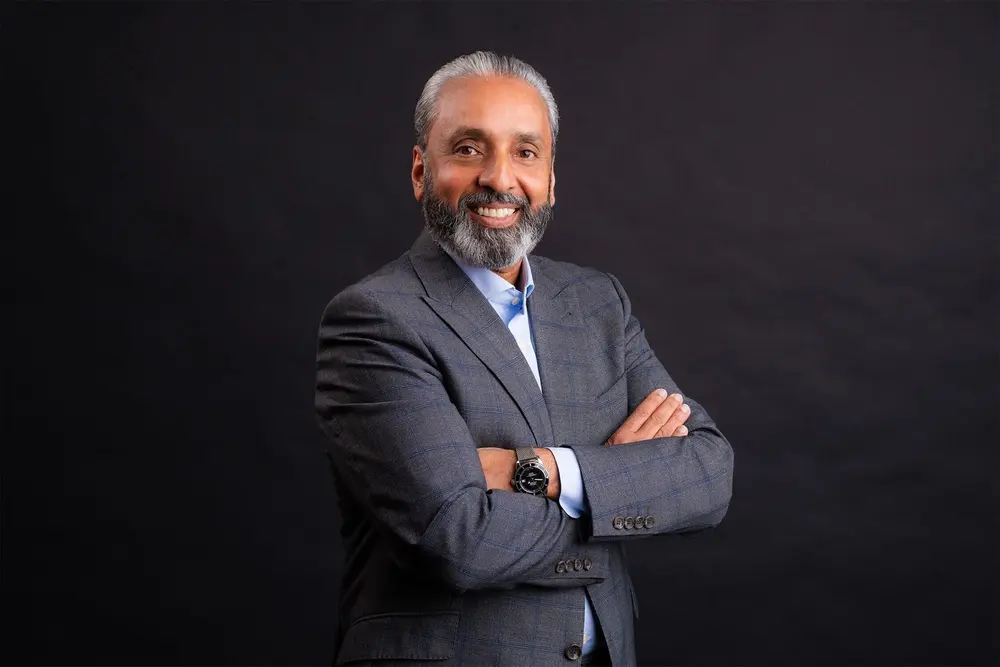

 ▶
 ▶
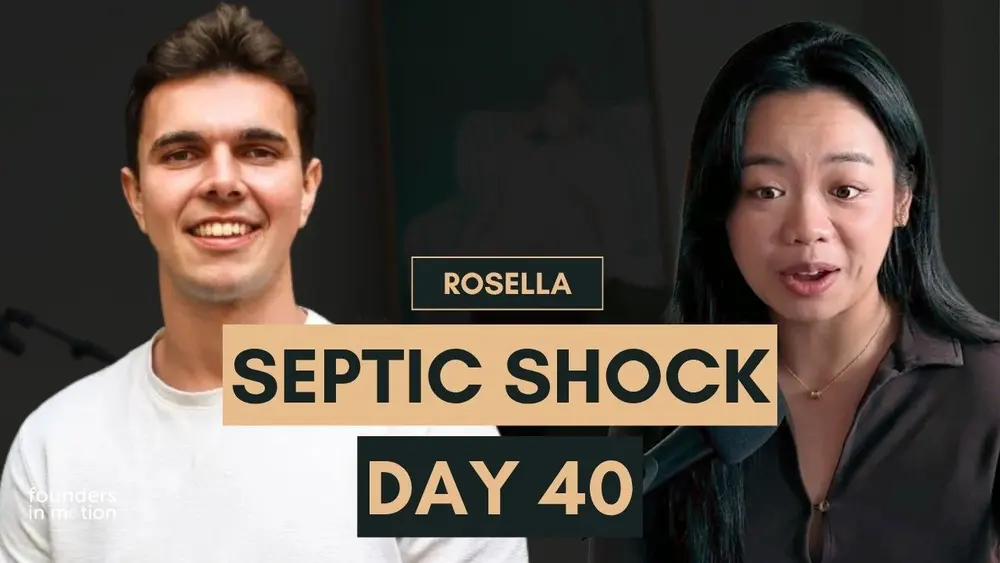 ▶